28 July 2008
Farewell
23 July 2008
Reflections on Ministry, Part 4
There is one factor that is simply essential to being an effective missioner/ministry developer. Understanding its centrality to the work is the most important lesson I learned in my two years in the Western Region.
Relationships are at the center of the work that we do. In order for a missioner to work effectively with a congregation, there must be a relationship. All the people involved need to build trust. They need to care about one another. They need to know that the relationship is strong enough to withstand disagreement. If the relationship is healthy, anything can happen. Hard truths can be told. Risks can be taken. God’s work can be accomplished.
As I’ve conversed with the congregations that might employ me next, this is the single most important thing I’ve told them: First, we need to get to know one another and build our relationship. Then, we can figure out what the work is that we need to do together.
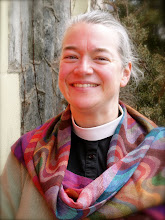
I want you to know that the relationships that have been built during my time with you are the most important gift I received in the two years that I have been among you. You reached out, shared of yourselves and your stories (and learned about me and my stories), and built the kinds of relationships out of which grow good effective ministry. You didn’t have to do it. We all knew this was likely to be a short-term gig. And yet, you did it anyway.
As I leave this place, my heart and mind are full. Full of love. Full of gratitude. Full of many many memories of the people and congregations I’ve encountered in this place. On the day that I officially transferred into this diocese, Jim Kelsy sent me an email with a subject line that read, “Now you’re a Yooper!” Except, I wasn’t really one, then. However, as much as any girl born and raised out east can be, I am one now. By living among you and being loved by you (and, as I hope you know, loving you in return) I’ve become a Yooper by adoption – and I will carry you with me when I go out from this place.
So, my friends, thank you. Thank you for many wonderful meals, spare beds to sleep in, and great conversations. Thank you for sharing your laughter and your tears. Thank you for encouraging me and challenging me. Thank you for welcoming me into your midst. And finally, thank you for sending me out into the world a far better Missioner/Ministry Developer than I was when I arrived two years ago.
18 June 2008
Reflections on Ministry, Part 3
For the past two weeks, I've written about the skills I've been developing and about the things I've learned about myself. This week, I thought I would share the conventional wisdom that discovered over the past two years. So, here it is....Fran's Top Ten List of Conventional Missioner/Ministry Developer Wisdom. (Note that some of this is largely personal and some of this is probably good advice for everybody!)
10. Get a good map. The best way to learn my way around a new area is to get a good map and then use it. Repeatedly. I'm still learning shortcuts after 75,000 miles.
9. Get lost on purpose. Sometimes it's a good idea to take the time to drive down a road, just to see where it goes.
8. Audible.com rocks. Driving well between two and three thousand miles per month could be wasted time. The $15 per month cost of an audible.com subscription would be worth it at twice the price. I encountered a number of books that strongly influenced me in the past year, and they were all books that I listened to on my iPod. ("What were they?" you ask. Eat, Pray, Love by Elizabeth Gilbert, The Omnivore's Dilemma by Michael Pollan, A Thousand Splendid Suns by Khaled Hosseini, and Three Cups of Tea by Greg Mortinsen and David Oliver Relin).
7. XM Radio rocks, too. Any device that gives this displaced Boston Red Sox fan access to live Red Sox baseball is worth its weight in gold.
6. ALWAYS carry snacks in the car; make sure that some of those snacks contain protein. Any number of things can happen to change the course of a day, and I am absolutely useless if I am hungry.
5. Remember to eat the snacks. I must eat one of the aforementioned snacks before church every Sunday morning, even if I think I'm not hungry. I recently learned the hard way that it is very difficult to preside and preach when my blood sugar is plummeting rapidly.
4. Make time to read. It took me a while to settle in to a routine. But not reading, for professional development and for fun, is simply not an option.
3. Be early. By now, you might know me well enough to know that being on time is a challenge. (I think that I managed to fool most of you for quite a while, but the above statement is, sadly, true.) However, it's so much better to arrive early - whether it's for a meeting, a service, or lunch. I do whatever I'm doing better when I am not feeling rushed.
2. Just do it. I can be a bit of a procrastinator. (This may qualify as the understatement of the year!) It took me some time to get adjusted to working from home. I also struggle with ambiguous deadlines. The sooner I get a project done, the less I have to worry about it.
1. Snow tires really are better than all season radials in this part of the world. Need I say more?
13 June 2008
Reflections on Ministry, Part 2
Last week, I wrote about some of the particular skills I've worked on, in order to be an effective Missioner/Ministry Developer. This week, I am reflecting on some of the transformation that has taken place within me, as I have lived and worked among you.
I try to hide it, but on the inside I am not always confident. When I first arrived, I felt very shy and unsure of myself. This was a whole new arena for me, and I was afraid that I was not up to the task. Manuel [my supervisor] was terrific. I've told him privately, but let me just say publicly and for the record, that he is the best supervisor I've ever had. He encouraged me to reach beyond what felt comfortable (and frankly, at the beginning, that was just about everything!) and to take risks. When I made mistakes, he didn't give me grief. Instead, he asked me what I'd learned, and how I might do something differently the next time. Learning to ask this question, rather than beat myself up for making a mistake, has changed me.
Manuel's quiet encouragement fostered my own self-confidence. While there are certainly still many moments when I wonder what the right course of action is (and I'll always have those moments!), I've learned to trust my own intuition. If my gut tells me something, I listen and act.
The book of Ecclesiates tells us that there is a season for everything. A time to plant, and a time to reap, a time to mourn and a time to dance, etc. For a missioner, there is a time to be quiet and a time to speak. I've worked hard to learn (and am still learning) what that balance is for myself. Some of this learning about balance comes from my own increased comfort with conflict. In the past, I spent an enormous amount of energy trying to keep everyone I worked with happy. That's neither possible, nor helpful. I've gotten much more comfortable with ambiguity, with uncertainty, and with leaving things unresolved for a time.
All of these personal learnings have helped me to become better at what I do. They enable me to act, without worrying (too much) about whether the action is the right thing.
06 June 2008
Reflections on Ministry, Part 1
These reflections were written so that I might share some of what I have learned during my two years as the Missioner/Ministry Developer Intern in the Western Region of the Episcopal Diocese of Northern Michigan. I’ve learned so many things, that listing them out seems like a daunting task. In the end, I decided to divide up what I’ve learned into four different areas, reflecting a bit on one area each week.
It seems a bit obvious to say it, but one of the most important things I’ve learned is how to be a missioner! Seminary training is generally geared towards those who want to be rectors, so I spent much of my early time in the position trying to reorient myself to a new way of being. I had done some reading about mutual ministry, but that was, of course, no substitute for actually practicing mutual ministry in real congregations with real people. You were very patient!
Teaching is an important part of the job – teaching in sermons, teaching in Ministry Support Team meetings, teaching any time the opportunity comes up. I’ve discovered that many things can be teaching moments. Sharing the benefits of my seminary training with all of you is an important responsibility of the work. You can undertake your ministries most effectively when you have the knowledge that you need.
The people that I work with (that’s all of you!) have a great number of skills and talents (that’s not a surprise – I learned that VERY quickly). However, you don’t always see them. Therefore, another piece of what I have learned is that being a missioner involves being a cheerleader and an encourager.
My position as one who is both inside and outside the congregation gives me some perspective that those of you in the congregation may not have. This perspective allows me to do two things. First, I can help when conflict arises within congregations. And, it enables me to watch the horizon. It’s important that I look ahead, in order to see what’s coming up, and to make sure that you are ready for whatever it is before it gets here.
Another important lesson is that no two congregations are alike. Often, friends will ask me what my job involves. My answer is always that there is no one way to be a missioner. The job requires getting to know each congregation, and then adapting one’s work to fit the needs of that particular group.
I’m still not sure what I’ll be doing next, but I do know, as I’ve begun interviewing for other positions, that the things I’ve learned about being a missioner will serve me well. As I’ve answered questions from congregations about the work I might do with them, I’ve drawn on the things I’ve learned about being an effective missioner. I may go on from here to work with a single congregation as rector, but it’s clear to me that I will be a rector who is first and foremost a ministry developer.
More Wildlife Stories
19 April 2008
Fran's ordination sermon 1/2
This is the first half of the sermon that my friend Anne Kirchmier preached at my ordination to the diaconate over two years ago. The setting is Virginia Theological Seminary and the owner of the video camera is Sarah Gordy. The video quality is pretty sketchy, but the audio quality is excellent. And, I must say this is one of the best sermons I've ever had the privilege to hear. Part 2 will appear eventually.
10 March 2008
Top 100 Books
The pre-college graduation books are highlighted in blue. The post-college ones, in red.
1. 1984 by George Orwell
2. The Lord of the Rings by J.R.R. Tolkien
3. The Catcher in the Rye by J.D. Salinger
4. Pride and Prejudice by Jane Austen
5. To Kill a Mockingbird by Harper Lee (I finally read this last year, and thought it was amazing. Thanks to Sister Nancy Hopkins for the push.)
6. Crime and Punishment by Fyodor Dostoevsky
7. The Great Gatsby by F. Scott Fitzgerald
8. Lolita by Vladimir Nabokov
9. Catch-22 by Joseph Heller
10. Wuthering Heights by Emily Bronte
11. Brave New World by Aldous Huxley
12. Jane Eyre by Charlotte Bronte
13. Ulysses by James Joyce
14. Animal Farm by George Orwell
15. Great Expectations by Charles Dickens
16. The Hitchhiker’s Guide to the Galaxy by Douglas Adams
17. The Brothers Karamazov by Fyodor Dostoevsky
18. Les Miserables by Victor Hugo
19. The Picture of Dorian Gray by Oscar Wilde
20. The Grapes of Wrath by John Steinbeck
21. The Hobbit by J.R.R. Tolkien
22. Anna Karenina by Leo Tolstoy
23. Don Quixote by Miguel de Cervantes
24. The Count of Monte Cristo by Alexandre Dumas
25. A Tale of Two Cities by Charles Dickens
26. Frankenstein by Mary Shelley
27. East of Eden by John Steinbeck
28. A Clockwork Orange by Anthony Burgess
29. Life of Pi by Yann Martel
30. Lord of the Flies by William Golding
31. Gone with the Wind by Margaret Mitchell
32. One Hundred Years of Solitude by Gabriel Garcia Marquez
33. War and Peace by Leo Tolstoy
34. The Sound and the Fury by William Faulkner
35. The Da Vinci Code by Dan Brown
36. Ender’s Game by Orson Scott Card
37. Rebecca by Daphne du Maurier
38. Fahrenheit 451 by Ray Bradbury
39. Memoirs of a Geisha by Arthur Golden
40. Slaughterhouse-Five by Kurt Vonnegut
41. The Time Traveler’s Wife by Audrey Niffenegger
42. A Portrait of the Artist as a Young Man by James Joyce
43. The Master and Margarita by Mikhail Bulgakov
44. His Dark Materials by Phillip Pullman
45. The Chronicles of Narnia by C.S. Lewis
46. Invisible Man by Ralph Ellison
47. Atlas Shrugged by Ayn Rand
48. The Kite Runner by Khaled Hosseini
49. The Stand by Stephen King
50. A Farewell to Arms by Ernest Hemingway
51. Heart of Darkness by Joseph Conrad
52. Tess of the D’Urbervilles by Thomas Hardy
53. The Sun Also Rises by Ernest Hemingway
54. The Fountainhead by Ayn Rand
55. Watership Down by Richard Adams
56. Dracula by Bram Stoker
57. Of Human Bondage by W. Somerset Maugham
58. Moby Dick by Herman Melville
59. One Flew Over the Cuckoo’s Nest by Ken Kesey
60. The Heart is a Lonely Hunter by Carson McCullers
61. On the Road by Jack Kerouac
62. The Idiot by Fyodor Dostoevsky
63. Pale Fire by Vladimir Nabokov
64. Dune by Frank Herbert
65. The Poisonwood Bible by Barbara Kingsolver (This is, officially, my favorite book of all time. I'm thrilled that it made the list.)
66. Harry Potter Series by J.K. Rowling
67. Anne of Green Gables by L.M. Montgomery
68. Doctor Zhivago by Boris Pasternak
69. The Unbearable Lightness of Being by Milan Kundera
70. Gravity’s Rainbow by Thomas Pynchon
71. Little Women by Louisa May Alcott
72. The Trial by Franz Kafka
73. I, Claudius by Robert Graves
74. The Curious Incident of the Dog in the Night-time by Mark Haddon
75. Madame Bovary by Gustave Flaubert
76. The Bell Jar by Sylvia Plath
77. A Confederacy of Dunces by John Kennedy Toole
78. The Old Man and the Sea by Ernest Hemingway
79. To the Lighthouse by Virginia Woolf
80. Vanity Fair by William Thackeray
81. Love in the Time of Cholera by Gabriel Garcia Marquez
82. The Stranger by Albert Camus
83. The Adventures of Huckleberry Finn by Mark Twain
84. The Hunchback of Notre Dame by Victor Hugo
85. The Phantom of the Opera by Gaston LeRoux
86. For Whom the Bell Tolls by Ernest Hemingway
87. Jude the Obscure by Thomas Hardy
88. Oliver Twist by Charles Dickens
89. The Adventures of Sherlock Holmes by Sir Arthur Conan Doyle
90. Persuasion by Jane Austen
91. Light in August by William Faulkner
92. Franny and Zooey by J.D. Salinger
93. Call of the Wild by Jack London
94. Middlesex by Jeffrey Eugenides
95. Alice’s Adventures in Wonderland by Lewis Carroll
96. Uncle Tom’s Cabin by Harriet Beecher Stowe
97. The Metamorphosis by Franz Kafka
98. The Name of the Rose by Umberto Eco
99. The Clan of the Cave Bear by Jean M. Auel
100. As I Lay Dying by William Faulkner
So, I've read 35 of them. About 1/3 of the list. And of that 35, only 12 of them, in the last 20 years. Suzanne rather jokingly suggested an online Top 100 book group. We could all read one each month, and then check in with one another about what we think. I'm half-convinced that it's a great idea. Anybody out there game for the idea?
14 January 2008
Michigan's Messed-up Primary or Small Town Joys
10 January 2008
A New Year's Meme
08 January 2008
book pushing
01 January 2008
Getting Hitched
29 December 2007
Winter Wonderland
The best part, though, is that we've been able to enjoy it. Michelle bought me snowshoes for Christmas, and we've been walking Bird-dog nearly every afternoon after work. And, yesterday, we went cross-country skiing for the first time this winter. It felt great to get out there and move. On Boxing Day (12/26), I drove to Duluth to see my friend Marlene, and even did some snowshoeing over there.
When I was younger, I always thought of winter as this totally desolate time, but what I see now is that it is beautiful. It's a different kind of beauty from the wild and exuberant beauty of summer, for sure, but it is beautiful, nonetheless. The light in the woods yesterday afternoon was simply spectacular, and it took my breath away. We were skiing in the late afternoon, and as it grew closer to dusk, it seemed as though the snow as actually glowing with a kind of pinkish light. It was simply lovely.
17 November 2007
Buy cards of Frannie's art!
14 November 2007
The Year of Magical Thinking
10 September 2007
What are you reading?
1. God and Empire: Jesus Against Rome, Then and Now by John Dominic Crossan. A gift from Sare, this one has been on my shelf for months, but I finally picked it up as preparation for a retreat I'm co-leading at the end of the month. Crossan provided a history of the intersection between the Roman empire, the homeland Jews of Jesus' time, and the early church. He undertakes this examination (as I understand it) in order to explore how the contemporary US Govt. acts like an empire (and has for 150 years) and what the implications are for Christian Americans. I think I'm going to love it - the centrality of justice and the need for Christians to work to bring about God's justice and God's kingdom are passions for me.
2. Opening the Prayerbook by Jeffry Lee. Lee, writing this volume as part of the New Church's Teaching Series, examines the history and context of the prayerbook and the theologies that contributed to the 1979 (most recent) Book of Common Prayer. He places many of the prayerbook services in context. I'm reading this one with the Ministry Support Team at the Church of the Holy Innocents in Little Lake.
3. Preaching What We Practice: Proclamation and Moral Discernment by David Schlafer and Timothy F. Sedgwick. I began this book on vacation, before I headed out to spend a week with Tim (the author) and his wife Martha. He'd given it to me last spring (BJD - Before Jim Died) and I didn't read much in those first few months. I wanted to be able to talk about it with him. The book is well-written and makes a strong case for preachers to preach moral discernment, in order to help those in the pews make sense of (and take action regarding) much of what is happening in the US today.
4. The Message: Daily Reading Bible and The Message//Remix by Eugene Peterson. Having not completed absolutely every reading assignment in seminary (I know, you're shocked) I thought it might be time to read the bible again. I got a cool audio version for my iPod, which breaks the bible up into manageable daily reading chunks (though I tend to listen to several at a time). The Message is a contemporary translation by a guy named Eugene Peterson. I'm really enjoying it so far - though I'm only in Genesis....
5. LifeCycles by the LifeCycles Team (of which I am a member, now!). LifeCycles is the adult formation program in the Diocese of Northern Michigan. Two groups I work with are presently working with it. The Ironwood Ministry Support Team began Cycle I, Unit 1 last week, and the Iron River Ministry Support Team returned to LifeCycles after a multi-year hiatus. They are working on Cycle I, Unit 3.
6. Celtic Benediction: Morning and Night Prayer by J. Philip Newell. I'm not so much reading this one as using it for morning prayer (at least I am when I actually find time for morning prayer - true confessions, here!).
7. Blogs. Back BJD, I read blogs really regularly. Not random ones, though that can be fun. But mostly, with a couple of exceptions, the blogs of people I know and love, who live someplace other than here. It's been a way to keep up. To know what they're thinking about and what they're up to. It's one of the routines that simply vanished in the weeks after Jim died. But I'm sort of regaining my equillibrium, and I'm back to blogs. I don't read them every day, but I do try to check in a few times per week. For a list of the blogs I read, see the right sidebar of this blog. I don't know Fr. Jake and I don't know the WTFWJD woman (though I sure wish I did, she's fun) but all the other folks are people I love and miss.
30 August 2007
Fall Comes to the UP
I LOVE this book
You're Watership Down!
by Richard Adams
Though many think of you as a bit young, even childish, you're
actually incredibly deep and complex. You show people the need to rethink their
assumptions, and confront them on everything from how they think to where they
build their houses. You might be one of the greatest people of all time. You'd
be recognized as such if you weren't always talking about talking rabbits.
Take the Book Quiz
at the Blue Pyramid.
27 July 2007
Frannie returns to blogland
Warning: This part contains spoilers for Harry Potter and the Half-blood Prince (Book 6) - do not read if you don't want to know serious plot details:
In news that won't ber a surprise to those who know me, I've been reading Harry Potter this week. I began by re-reading The Halfblood Prince (Book 6). I was struck, at the end of the book, after Dumbledore is murdered, by how well J.K. Rowling wrote grief. I really resonated with how the staff and students at Hogwarts responded to the news of Dumbledore's death. Her descriptions of the pain, the confusion, and the denial, all rang so true to me.
There are a number of reasons why Harry Potter has become such a phenomenon and I'm not going to expound on them all. The reason that interests me, in this post, has to do with how well she captures the human condition. Her characterizations, her descriptions, and the ways that these characters respond ring true to me. Rowling gets it. And she writes it well.
I've got some backlogged things that I'll be posting in the next few days. I've got a few sermons that I've written in the time I've been away from my blog that I'd love to share. And I have a very long piece that I wrote for our Junior/Senior Camp for a talk that I gave there (that Jim was to have given) on friendship that I want to post, as well.
Thanks for checking back, despite the lack of new postings in such a long period of time.