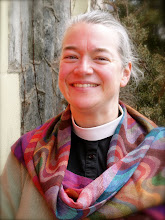
I know I've been pretty quiet in the last eight weeks. All I can say is that it's been a long road. Grief is so energy-sapping. And the work left to do has been all-consuming. But I am starting to see some light and to feel more like myself again, both of which are very good things.
Warning: This part contains spoilers for Harry Potter and the Half-blood Prince (Book 6) - do not read if you don't want to know serious plot details:
In news that won't ber a surprise to those who know me, I've been reading Harry Potter this week. I began by re-reading The Halfblood Prince (Book 6). I was struck, at the end of the book, after Dumbledore is murdered, by how well J.K. Rowling wrote grief. I really resonated with how the staff and students at Hogwarts responded to the news of Dumbledore's death. Her descriptions of the pain, the confusion, and the denial, all rang so true to me.
There are a number of reasons why Harry Potter has become such a phenomenon and I'm not going to expound on them all. The reason that interests me, in this post, has to do with how well she captures the human condition. Her characterizations, her descriptions, and the ways that these characters respond ring true to me. Rowling gets it. And she writes it well.
I've got some backlogged things that I'll be posting in the next few days. I've got a few sermons that I've written in the time I've been away from my blog that I'd love to share. And I have a very long piece that I wrote for our Junior/Senior Camp for a talk that I gave there (that Jim was to have given) on friendship that I want to post, as well.
Thanks for checking back, despite the lack of new postings in such a long period of time.
27 July 2007

07 June 2007
James Arthur Kelsey, RIP

MARQUETTE, MI —The world became a darker place with the passing of James Arthur Kelsey.
James Arthur Kelsey James gained love and respect from everyone he met in his professional and personal life. James spent his life giving — giving of his time, his heart, and his soul to help anyone and everyone in need. His levels of compassion and kindness were unparalleled. A courageous man, willing to stand up for his beliefs. James Kelsey was the benchmark to which great men are judged. Not only a great man, but a great husband and father. There was no better model for how to be a truly wonderful human being than the one he provided for his sons and daughter.
If the world were full of more men like James Arthur Kelsey, it would be a wonderful place. Sadly, today we find ourselves with one less.
James Arthur Kelsey was born August 27, 1952, along with twin brother Stephen, in Baltimore, Md., to parents Arthur Corson Kelsey and Louise Martien. James, who liked to be called Jim, attended schools in New York City and Burlington, Vt. He graduated from Ithaca College in New York in 1974 with a Bachelor's Degree in Philosophy. In 1976 while at General Theological Seminary, he fell in love and married Mary Cruse.
After graduating from General Theological Seminary in 1977, Jim was called to be Deanery Curate for four congregations in southwestern Vermont. Following his ordination to the priesthood in 1978, he was called to be the rector of Holy Trinity Church in Swanton and priest-in-charge of three missions which gradually evolved into an eight-point cluster over the next seven years. During his year at Holy Trinity, his interest in collaborative ministry deepened. A non-hierarchal form of leadership emerged there, which included a locally ordained priest and a team of persons who shared ministry support responsibilities. Holy Trinity was recognized by the national church as one of ten effective congregations highlighted in the publication Against All Odds, prepared for the 1982 General Convention.
In 1985 Jim answered a call by the Diocese of Oklahoma to help establish a diocesan-wide strategy for cluster ministries. His work there focused especially with eight congregations in a six-county area in east-central Oklahoma. He began an extensive consulting role on collaborative ministry throughout the U.S. and Canada.
Jim and Mary, along with their children, moved to the Upper Peninsula for his new role as Ministry Development Coordinator in the Diocese of Northern Michigan in 1989. He felt an affinity immediately with the U.P., as it reminded him of his summers in Vermont as a youth. This position he held until his election as Bishop in 1999.
Since coming to the diocese, over half of the diocese's 27 congregations have embraced Mutual Ministry, as collaborative ministry is known in Northern Michigan. It is characterized by the commissioning of local Ministry Support Teams supported by seminary-trained regional missioners. Interest in Mutual Ministry by other dioceses in the U.S. and abroad led Northern Michigan and has brought visitors to the Diocese from all around the world, hungry for a first-hand look at this model for ministry.
Jim's consulting work over the years expanded overseas to include New Zealand and the United Kingdom and has touched over thirty-five dioceses in the United States. He participated in numerous national and international networks and training programs, including the Leadership Academy in New Directions (LAND), Sindicators, Synagogy, Coalition 14, an International Symposium on Local Collaborative Ministry, and together with his colleagues, initiated an educational resource for community formation, called LifeCycles. He was also a founding leader of "Living Stones," a lively multi-diocesan community of ministry developers.
During successive General Conventions, Jim chaired and participated in various committees, speaking passionately on issues around the ministry of all the baptized. Through his hard work and collaboration with others, significant changes were made to the national church Canons. Most recently, in recognition of his "prophetic leadership in supporting the baptismal ministry of all Episcopalians and for the Diocese's work in helping to transform congregations from being communities gathered around a minister to ministering communities,"
Jim was honored at the Episcopal Divinity School with a Doctor of Divinity, honoris causa on May 17, 2007.
Jim was the Bishop Protectorate for the Society of St. Francis, Province of the Americas, and was himself a Third Order Franciscan, who was steadfastly working to follow the path of St. Francis. He was deeply committed to peace and justice issues and protecting the environment. He was a member of the Bishops for a Just Society and one of the founding leaders of the ecumenical group Earth Keepers.
Jim loved music and films, learning new technologies and perhaps best of all the New York Yankees.
James Arthur Kelsey is survived by his wife, Mary Kelsey of Marquette; three children, Nathan Kelsey of Johnston, Iowa, Lydia Kelsey and her fiance, Jared Bowman of North Liberty, Iowa, and Amos Kelsey of Mackinac Island; his mother, Louise Kelsey of Easthampton, Mass.; two sisters, Ann Lammers of Peterborough, N.H., and Meg (Jonathan) Wright of Florence, Mass.; one twin brother, Steve (Kathy Barrett) Kelsey of Durham, Conn.; father- and mother-in-law, John and Shirley Cruse of West Des Moines, Iowa; brothers-in-law, John (Patty) Cruse of Madison, Wis., and Fred (JoAnn) Cruse of New Glarus, Wis.; sisters-in-law, Hildy Smith of West Des Moines, Iowa, Gail (Ed) Cudworth of Urbandale, Iowa, and Katy Andreen of Des Moines, Iowa; also surviving are numerous nieces and nephews. He was preceded in death by his father, Arthur Kelsey.
Visitation will be on Friday from 9 a.m. to 1 p.m. at St. Paul 's Episcopal Church in Marquette. A Memorial Eucharist will be held at St. Michael's Catholic Church in Marquette at 4 p.m. EDT Friday with the Rt. Rev. Bruce Caldwell, bishop of Wyoming, presiding. Memorials are preferred in Bishop Kelsey's memory to the Page Conference Center c/o Episcopal Diocese of Northern Michigan, 131 E. Ridge St., Marquette, MI 49855 .Bishop Kelsey's obituary can also be viewed at www.canalefuneral.com where relatives and friends may leave a note of remembrance.The Canale-Tonella Funeral Home of Marquette is assisting the family with arrangements.
Broken Hearted
Sarah and I were on vacation. We'd spent the day, in clerical collars, marching in Buffalo's gay pride parade. We'd started planning how to spend the rest of the week, painting the living room, hiking Niagra gorge, having dinner with her Mama. The opening credits had just rolled on Memoirs of a Geisha when my cell phone rang.
I knew something was terribly wrong if Manuel was calling me on my vacation. His news: that our bishop, Jim Kelsey, had been killed in a car accident several hours previously. I told him I was coming home. Sarah, officially the best friend ever, came with me. We drove 14.5 hours back to the UP on Monday (only 48 hours after I'd driven 14.5 hours to Buffalo).
We're all in shock. We're all grieving. Our hearts are broken.
Jim's funeral will be tomorrow (Friday, June 8, at 4pm).
I knew something was terribly wrong if Manuel was calling me on my vacation. His news: that our bishop, Jim Kelsey, had been killed in a car accident several hours previously. I told him I was coming home. Sarah, officially the best friend ever, came with me. We drove 14.5 hours back to the UP on Monday (only 48 hours after I'd driven 14.5 hours to Buffalo).
We're all in shock. We're all grieving. Our hearts are broken.
Jim's funeral will be tomorrow (Friday, June 8, at 4pm).
21 May 2007
Sermon, Easter 7
I know, I've been gone for weeks, and suddenly, I'm the mad poster. But most of this stuff was already done and just WAITING for me to post. So here goes. I was quite pleased with the final results of this one.
20 May 2007 Iron River/Houghton
In today’s reading from the Gospel of John, Jesus prays that all may be one. For weeks now, we’ve been hearing a conversation between him and his close followers, but today, the mood changes. Instead of a discourse or a dialogue, we are privileged to eavesdrop on Jesus’ prayer. He stops talking to the disciples, and begins talking to his Father.
And the first thing that he asks God to do in that prayer is to help all to be one, as he and his Father are one. He’s not just praying for his friends gathered at the table. Nor is he praying only for those followers who have been with him on his journey. He is praying for ALL to be one. Jesus asks God to make one his close friends and all those who will come to believe in him through their words and witness.
One of the amazing things about this prayer is that it ties together all of us who have come to believe in Jesus. When Jesus prays that all will be one in this way, it covers everyone from his early followers, throughout the ages and generations, to us today and beyond us to our children and grandchildren. When Jesus says ALL, he means ALL.
Much has been made, in recent years, of the various and sundry ways that Christians are divided. Are we progressives or fundamentalists? Are we Baptists? Methodists? Roman Catholics? Lutherans? Are we Anglicans or Episcopalians?
Does our worship represent primacy of scripture or of sacrament?
As some of you know, I was in Virginia this week. On the plane coming home, working on this very sermon, I met an Evangelical man who, when he heard that I was an Episcopalian, began to engage me in conversation. While he was gracious about it, his agenda was to make sure that I understood that his church interpreted scripture correctly and that ours seemed to miss the boat.
Perhaps our disagreements are more local, hinging around questions of church governance, music, or forms of worship. Certainly in my forty plus years of church membership, I’ve witnessed more church arguments at this local level than great arguments over who’s in or out.
The truth is, with very little difficulty, we can name a hundred ways that we are separated one from another, and yet still call ourselves Christian. And we could throw up our hands in despair because we somehow seem to be failing at this directive of Jesus. Except, that “may they all be one” is not a directive. It is Jesus’ prayer on our behalf. It’s the thing that he is asking God to accomplish on our behalf, not something that we are entirely responsible for.
I don’t know about you, but I have found questions of unity to be particularly troubling in recent months within our own Episcopal Church/Anglican Communion. Will there be schism? Will there be separation? Will the US Church get booted out of the family?
This week in Virginia, I spent time with Kathy Grieb, one of my favourite professors at Virginia Theological Seminary. Kathy teaches Greek and New Testament at VTS, and she was part of the Covenant Design Team that met in January, attempting to craft a covenant that might keep all of us at the Anglican Table.
Several months later, Kathy spoke to the US House of Bishops, essentially blowing the whistle about how skewed the process was. In the end, while I think that Kathy finds some things useful about the idea of covenant, she was not at all wild about the way the chips seem to be falling in this particular process.
On Friday, a group of friends, including Kathy, gathered for coffee and dessert. Kathy talked with us for several hours about her views on the church and the implications for what might happen as we move forward. It was amazing to hear her lay out implications and to talk about her passion for mission.
I actually jettisoned the first draft of this sermon after that conversation, as I made the connection between what Kathy had to say about the church and mission and how these things might relate to Jesus’ prayer on our behalf that we all might be one.
Certainly there are those who would like to see us all one as Jesus and the Father are one in some sort of cookie cutter, uniform way. In this view, there is a single entity who describes what is orthodox (right belief) and orthopraxis (right behaviour/practice). And those of us who fail to conform to those beliefs and practices will be left behind.
In the history of the church, this sort of line drawing has happened repeatedly.
But there is another kind of one-ness that seems possible to me, one that is not based in either orthodoxy or orthopraxis.
This one-ness comes out of the teachings of Jesus. In these last weeks, as Jesus prepared his disciples for his departure from them, he reminded them that others would know them by their love for one another. And he said that they could recognize other lovers of God based on those who kept His word.
In this vein, I’d like to share a story that Kathy told us on Friday night.
She said that back in the early 1980s, there was a US cathedral that had a mission relationship with a diocese in the Pacific Islands. The Episcopal Church had begun ordaining women; the Pacific Island Anglicans thought that ordaining women was a terrible idea. What to do? What would become of that mission-connection? Would the connection be severed over disagreements in church practice?
Well, apparently representatives from the cathedral travelled to that diocese. Each party acknowledged the difference of opinion. They shook hands and then the two sides got down to work literally building a church and building relationships. Their unity of purpose, of spreading the gospel, of behaving as Jesus behaved seemed far more crucial to them than some sort of lock-step orthodoxy.
Today, we have that same opportunity. We may or may not all agree. But we have the opportunity to demonstrate our one-ness not by conformity to one side’s view of orthodoxy, but by our commitment to living out the gospel. This town, this county, this nation, and our world are all filled with people who are hungry, thirsty, naked, homeless, addicted, oppressed and/or in need of the Good News of Jesus Christ. The gospel calls us to act for justice.
Scripture provides us with a variety of texts that can be interpreted in a host of ways, speaking to issues of morality and behaviour. It is unwavering in it’s directives that we are to act for justice.
We can show ourselves open to the unity that Jesus prayed for by caring less about whether we agree on the issues that threaten to divide us and caring a great deal more about the amazing work we can accomplish together coming out of acting for justice.
Rather than throwing up our hands in despair about the conservatism or liberalism of our perceived enemies, we can form partnerships with those with whom we disagree theologically, in order to act for justice.
Kathy told us on Friday night that she’s heard a number of liberal Americans say, “Well, they say they don’t approve of us, yet they are happy to take our money.” And she has heard African bishops say, “We won’t take money from sinners.” No one is served by this type of mentality, least of all, God.
I find little hope of us all being one, as Jesus and the Father are one if we think it can be accomplished based on finding some common ground of orthodoxy. I find great hope of our all being one, if we come together in a commitment to serving those in need and acting for justice.
AMEN.
In today’s reading from the Gospel of John, Jesus prays that all may be one. For weeks now, we’ve been hearing a conversation between him and his close followers, but today, the mood changes. Instead of a discourse or a dialogue, we are privileged to eavesdrop on Jesus’ prayer. He stops talking to the disciples, and begins talking to his Father.
And the first thing that he asks God to do in that prayer is to help all to be one, as he and his Father are one. He’s not just praying for his friends gathered at the table. Nor is he praying only for those followers who have been with him on his journey. He is praying for ALL to be one. Jesus asks God to make one his close friends and all those who will come to believe in him through their words and witness.
One of the amazing things about this prayer is that it ties together all of us who have come to believe in Jesus. When Jesus prays that all will be one in this way, it covers everyone from his early followers, throughout the ages and generations, to us today and beyond us to our children and grandchildren. When Jesus says ALL, he means ALL.
Much has been made, in recent years, of the various and sundry ways that Christians are divided. Are we progressives or fundamentalists? Are we Baptists? Methodists? Roman Catholics? Lutherans? Are we Anglicans or Episcopalians?
Does our worship represent primacy of scripture or of sacrament?
As some of you know, I was in Virginia this week. On the plane coming home, working on this very sermon, I met an Evangelical man who, when he heard that I was an Episcopalian, began to engage me in conversation. While he was gracious about it, his agenda was to make sure that I understood that his church interpreted scripture correctly and that ours seemed to miss the boat.
Perhaps our disagreements are more local, hinging around questions of church governance, music, or forms of worship. Certainly in my forty plus years of church membership, I’ve witnessed more church arguments at this local level than great arguments over who’s in or out.
The truth is, with very little difficulty, we can name a hundred ways that we are separated one from another, and yet still call ourselves Christian. And we could throw up our hands in despair because we somehow seem to be failing at this directive of Jesus. Except, that “may they all be one” is not a directive. It is Jesus’ prayer on our behalf. It’s the thing that he is asking God to accomplish on our behalf, not something that we are entirely responsible for.
I don’t know about you, but I have found questions of unity to be particularly troubling in recent months within our own Episcopal Church/Anglican Communion. Will there be schism? Will there be separation? Will the US Church get booted out of the family?
This week in Virginia, I spent time with Kathy Grieb, one of my favourite professors at Virginia Theological Seminary. Kathy teaches Greek and New Testament at VTS, and she was part of the Covenant Design Team that met in January, attempting to craft a covenant that might keep all of us at the Anglican Table.
Several months later, Kathy spoke to the US House of Bishops, essentially blowing the whistle about how skewed the process was. In the end, while I think that Kathy finds some things useful about the idea of covenant, she was not at all wild about the way the chips seem to be falling in this particular process.
On Friday, a group of friends, including Kathy, gathered for coffee and dessert. Kathy talked with us for several hours about her views on the church and the implications for what might happen as we move forward. It was amazing to hear her lay out implications and to talk about her passion for mission.
I actually jettisoned the first draft of this sermon after that conversation, as I made the connection between what Kathy had to say about the church and mission and how these things might relate to Jesus’ prayer on our behalf that we all might be one.
Certainly there are those who would like to see us all one as Jesus and the Father are one in some sort of cookie cutter, uniform way. In this view, there is a single entity who describes what is orthodox (right belief) and orthopraxis (right behaviour/practice). And those of us who fail to conform to those beliefs and practices will be left behind.
In the history of the church, this sort of line drawing has happened repeatedly.
But there is another kind of one-ness that seems possible to me, one that is not based in either orthodoxy or orthopraxis.
This one-ness comes out of the teachings of Jesus. In these last weeks, as Jesus prepared his disciples for his departure from them, he reminded them that others would know them by their love for one another. And he said that they could recognize other lovers of God based on those who kept His word.
In this vein, I’d like to share a story that Kathy told us on Friday night.
She said that back in the early 1980s, there was a US cathedral that had a mission relationship with a diocese in the Pacific Islands. The Episcopal Church had begun ordaining women; the Pacific Island Anglicans thought that ordaining women was a terrible idea. What to do? What would become of that mission-connection? Would the connection be severed over disagreements in church practice?
Well, apparently representatives from the cathedral travelled to that diocese. Each party acknowledged the difference of opinion. They shook hands and then the two sides got down to work literally building a church and building relationships. Their unity of purpose, of spreading the gospel, of behaving as Jesus behaved seemed far more crucial to them than some sort of lock-step orthodoxy.
Today, we have that same opportunity. We may or may not all agree. But we have the opportunity to demonstrate our one-ness not by conformity to one side’s view of orthodoxy, but by our commitment to living out the gospel. This town, this county, this nation, and our world are all filled with people who are hungry, thirsty, naked, homeless, addicted, oppressed and/or in need of the Good News of Jesus Christ. The gospel calls us to act for justice.
Scripture provides us with a variety of texts that can be interpreted in a host of ways, speaking to issues of morality and behaviour. It is unwavering in it’s directives that we are to act for justice.
We can show ourselves open to the unity that Jesus prayed for by caring less about whether we agree on the issues that threaten to divide us and caring a great deal more about the amazing work we can accomplish together coming out of acting for justice.
Rather than throwing up our hands in despair about the conservatism or liberalism of our perceived enemies, we can form partnerships with those with whom we disagree theologically, in order to act for justice.
Kathy told us on Friday night that she’s heard a number of liberal Americans say, “Well, they say they don’t approve of us, yet they are happy to take our money.” And she has heard African bishops say, “We won’t take money from sinners.” No one is served by this type of mentality, least of all, God.
I find little hope of us all being one, as Jesus and the Father are one if we think it can be accomplished based on finding some common ground of orthodoxy. I find great hope of our all being one, if we come together in a commitment to serving those in need and acting for justice.
AMEN.
Interview Questions, Round Two
It seems like weeks ago that Wayfarer sent me some interview questions. Finally, I am getting to them.
1. If you were given the chance to try one day or event in your life over again, what would it be? How might you try it differently?
When I was young and less responsible about the feelings of others, I ended a relationship badly. I was dating a lovely man, whom I would have married had I not finally sorted out that I was a lesbian. My inability to be honest with myself, combined with a certain lack of responsibility, led me to be unfaithful to him. I wish that I'd had the maturity, patience, and self-knowledge to end the relationship first and then enter into that new relationship.
2. What is your favorite form of entertainment that is NOT movies, television, music or books (I put the last one in there to make it a little tougher)?
Tough call. Games, I think. I love to be outdoors, hiking, photographing, enjoying, but I think of that less as entertainment somehow. And, the reality is that I could play games for days. Truly.
3. What is the greatest single challenge you have overcome in your life?
Loving my mother for who she is. When I was younger, I was very impatient with her and could easily see all of her flaws (conveniently missing my own). But, in the last five years, I've come to see all the complexities that made her who she is. And, I've learned how very lovable she is as a person.
4. What is one thing about you that your friends probably don’t know that would surprise them?
That the hardest food for me to give up, having become a vegetarian is NOT steak, or even pork tenderloin, but the humble hot dog. My father grew up in Aroostook County, Maine (Ashland and Portage); every single Saturday night we ate hot dogs and home made baked beans. Every Saturday. It is my ultimate comfort food. If I'm going to cheat on the vegetarian thing, it will be for hot dogs.
5. Imagine a memorial to you and your life. What would you want it to say? What would you want it to look like? Where would it be located?
I want whatever memorial that is erected to my life when I am gone to be small and to avoid taking up land that might be used for something more important than storing old dead bodies. I'd be happy to have my ashes live in a columbarium in a church, or scattered in a field of flowers.
I think that the most important work that can be done by those of us living on the planet right now is to love. Love deeply. Love everyone, even our enemies. And so I hope that a memorial to me might read something like, "She showed love to all she met." Or even, "We knew ourselves to be beloved by her." I had a friend die young and suddenly several years ago, and Adam's great gift to the world was the love he showed to us all. I hope that I do the same.
Now, here's the deal: It’s your turn! Here’s how it works: Leave me a comment saying, “Interview me” (or send me an email) and I’ll email you five hopefully provocative, entertaining questions. They’ll be different questions from the ones I’ve answered here (that’s the beauty of this!)You update your own blog with the answers to the questions I sent, and include an explanation of how this worked with an offer to interview someone else in the same post.When other people comment on your blog asking to be interviewed, you get to ask them five questions, and the process evolves. It's fun - so try it!
1. If you were given the chance to try one day or event in your life over again, what would it be? How might you try it differently?
When I was young and less responsible about the feelings of others, I ended a relationship badly. I was dating a lovely man, whom I would have married had I not finally sorted out that I was a lesbian. My inability to be honest with myself, combined with a certain lack of responsibility, led me to be unfaithful to him. I wish that I'd had the maturity, patience, and self-knowledge to end the relationship first and then enter into that new relationship.
2. What is your favorite form of entertainment that is NOT movies, television, music or books (I put the last one in there to make it a little tougher)?
Tough call. Games, I think. I love to be outdoors, hiking, photographing, enjoying, but I think of that less as entertainment somehow. And, the reality is that I could play games for days. Truly.
3. What is the greatest single challenge you have overcome in your life?
Loving my mother for who she is. When I was younger, I was very impatient with her and could easily see all of her flaws (conveniently missing my own). But, in the last five years, I've come to see all the complexities that made her who she is. And, I've learned how very lovable she is as a person.
4. What is one thing about you that your friends probably don’t know that would surprise them?
That the hardest food for me to give up, having become a vegetarian is NOT steak, or even pork tenderloin, but the humble hot dog. My father grew up in Aroostook County, Maine (Ashland and Portage); every single Saturday night we ate hot dogs and home made baked beans. Every Saturday. It is my ultimate comfort food. If I'm going to cheat on the vegetarian thing, it will be for hot dogs.
5. Imagine a memorial to you and your life. What would you want it to say? What would you want it to look like? Where would it be located?
I want whatever memorial that is erected to my life when I am gone to be small and to avoid taking up land that might be used for something more important than storing old dead bodies. I'd be happy to have my ashes live in a columbarium in a church, or scattered in a field of flowers.
I think that the most important work that can be done by those of us living on the planet right now is to love. Love deeply. Love everyone, even our enemies. And so I hope that a memorial to me might read something like, "She showed love to all she met." Or even, "We knew ourselves to be beloved by her." I had a friend die young and suddenly several years ago, and Adam's great gift to the world was the love he showed to us all. I hope that I do the same.
Now, here's the deal: It’s your turn! Here’s how it works: Leave me a comment saying, “Interview me” (or send me an email) and I’ll email you five hopefully provocative, entertaining questions. They’ll be different questions from the ones I’ve answered here (that’s the beauty of this!)You update your own blog with the answers to the questions I sent, and include an explanation of how this worked with an offer to interview someone else in the same post.When other people comment on your blog asking to be interviewed, you get to ask them five questions, and the process evolves. It's fun - so try it!
Grammar Maven
Thanks to Suzanne for pointing me to the cool quiz. Check it out yourself and see if you, too, are the bee's knees when it comes to apotrophes, pronouns, and punctuation.
Your Language Arts Grade: 100%
Way to go! You know not to trust the MS Grammar Check and you know "no" from "know." Now, go forth and spread the good word (or at least, the proper use of apostrophes).
Are You Gooder at Grammar?
Make a Quiz
05 May 2007
Sermon, Easter 5
Fran Gardner 6 May 2007 Easter 5 Ontonagon (and Houghton)
We human beings are good at sorting ourselves into subgroups. We do a nice job of delineating who belongs with us, and who does not. Perhaps we do it by how we dress, by skin colour, or by accent. We divide the world into boxes called counties, states, and nations. We identify strongly with the place of our birth, our national origin, and our ethnic background. And to some degree, this categorizing is natural and it makes sense. This dividing up of our selves into groups we belong to is a way of finding some order in a potentially chaotic world. It gives us identity.
We do the same kind of thing regarding our lives of faith. We identify ourselves as Episcopalians or Methodists. We claim to be followers of Mohammed or the Buddha. We name people as Gentile or Jew.
Today, Jesus tells his followers, “I give you a new commandment, that you love one another. Just as I have loved you, you also should love one another. By this everyone will know that you are my disciples, if you have love for one another.” Jesus’ message reminds us that is not how we dress, or what we wear that distinguishes us as Christians. It won’t be the cross we wear around our necks or (as the early disciples used) the sign of the fish that will mark us as Jesus’ followers. It will be the love that we show for one another.
Doing some research on this sermon, I googled a song I sang growing up in the RC church. In the end, the words weren’t quite right, so I opted not to use it. However, while on a Christian lyrics website, I saw a fascinating banner ad.
It offered me clothing that would make me Jesus Branded. This Christian clothing company made T-shirts with scripture passages and catchy graphics. It invited me to wear my faith on my sleeve. As if, somehow, wearing a T-shirt showing me to be a Jesus Ninjette (a truly frightening image, actually) or proclaiming “God is love” would mark me as follower of Jesus.
According to this website, all we have to do to demonstrate our faith as Christians is to be Jesus Branded.
“I give you a new commandment, that you love one another. Just as I have loved you, you also should love one another. By this everyone will know that you are my disciples, if you have love for one another.”
It shouldn’t be a surprise that contemporary Christians are confused about what is really important, if we are to follow Jesus. It sure didn’t take Jesus’ followers long to manifest the same confusion. It was shortly after Jesus’ death and resurrection when Peter ran into trouble.
Peter was in Joppa and in a dream was told to bring God’s word to some Gentiles. For most Jews, Gentiles were wholly other. Different. Forbidden. Speaking or eating with Gentiles would make you ritually unclean. This message to bring the Good News to the Gentiles would have been anathema to Peter.
In fact, it’s striking that in Peter’s dream, all of the unclean forbidden animals are roughly equivalent, at least in his mind, with those Gentiles. However, God’s message, and God’s subsequent sending of the Holy Spirit to those same Gentiles, convinced Peter that Jesus’ message was for all people, not some small subset that Peter happened to be a part of.
It was the same thing back in Jerusalem, where the Jewish followers of Jesus really needed some convincing. They were furious, and called Peter to account for his actions, certain that Peter had strayed terribly from the core message of Jesus, which they believed was offered only to the Jews.
“I give you a new commandment, that you love one another. Just as I have loved you, you also should love one another. By this everyone will know that you are my disciples, if you have love for one another.”
Left to our own devices, we might be as confused about what this passage means as Jesus’ followers were. We are naturally good at dividing up, drawing lines, marking people as either in or out. It might be hard for us to imagine a world where what truly marks us as Jesus’ followers, the real Jesus Brand if you will, is our capacity to love.
We overuse love. I’m as likely to tell you that I love ice cream, or kayaking, or board games, or my mother. The love that Jesus is talking about here is not Hallmark card love. It’s not the passionate love of lovers. It is the love that leads to action. This love is not a feeling, it’s a choice. This love is radical and world changing.
It’s the sort of love that tells a story where the hero is a Good Samaritan, a hated non-Jew, rather than a priest or temple authority. It’s the kind of love that offers living water to a non-Jewish woman of questionable moral values at Jacob’s well. It’s the kind of love that says, from the cross, “Father, forgive them, for they know not what they do.”
It’s the sort of love that caused Oscar Romero to speak out against the fighting in El Salvador, even knowing that it might (and ultimately did) cost him his life. It’s the sort of love that prompted Rosa Parks to say no to sitting in the back of the bus, despite enormous personal cost, because she could not longer tolerate living in a racially segregated society. It’s the kind of love that allows Desmond Tutu to speak of forgiveness, despite being personally harmed by South African apartheid. It’s the kind of love that allowed members of the Amish community to reach out to the family of the man who murdered their children, rather than to speak of vengeance.
These examples might sound impossible to us. We are, after all, not Romero, Parks, Tutu, or even members of an Amish community. But we are Christians.
It was fashionable several years ago, to wear a bracelet with the letters WWJD. What Would Jesus Do? It’s a question with great potential. It’s a question that has the capacity to lead us to deeper readings of scripture. There was the possibility, with the rise of WWJD, to resensitize a new generation of Christians to the depths of love and compassion that could be reached at every moment of choice we encounter. It could have provided the true Jesus Brand.
Instead, WWJD turned a deep question, worthy of years of reflection, into a sound bite, a bumper sticker, a question with no teeth, prompting snap judgments and lots of behaviour that didn’t appear to be much like what Jesus might actually have done.
In fact, we don’t have to wonder what Jesus would have done. Scripture is filled with the stories of what Jesus actually did. Our tradition is filled with the stories of holy men and women, prompted by love, who did radical things.
Each time we offer love, rather than hate; an open hand, rather than a fist; comfort and consolation, rather than scathing criticism and critique; we do what Jesus would have done. We brand ourselves with the true Jesus Brand.
“I give you a new commandment, that you love one another. Just as I have loved you, you also should love one another. By this everyone will know that you are my disciples, if you have love for one another.”
We human beings are good at sorting ourselves into subgroups. We do a nice job of delineating who belongs with us, and who does not. Perhaps we do it by how we dress, by skin colour, or by accent. We divide the world into boxes called counties, states, and nations. We identify strongly with the place of our birth, our national origin, and our ethnic background. And to some degree, this categorizing is natural and it makes sense. This dividing up of our selves into groups we belong to is a way of finding some order in a potentially chaotic world. It gives us identity.
We do the same kind of thing regarding our lives of faith. We identify ourselves as Episcopalians or Methodists. We claim to be followers of Mohammed or the Buddha. We name people as Gentile or Jew.
Today, Jesus tells his followers, “I give you a new commandment, that you love one another. Just as I have loved you, you also should love one another. By this everyone will know that you are my disciples, if you have love for one another.” Jesus’ message reminds us that is not how we dress, or what we wear that distinguishes us as Christians. It won’t be the cross we wear around our necks or (as the early disciples used) the sign of the fish that will mark us as Jesus’ followers. It will be the love that we show for one another.
Doing some research on this sermon, I googled a song I sang growing up in the RC church. In the end, the words weren’t quite right, so I opted not to use it. However, while on a Christian lyrics website, I saw a fascinating banner ad.
It offered me clothing that would make me Jesus Branded. This Christian clothing company made T-shirts with scripture passages and catchy graphics. It invited me to wear my faith on my sleeve. As if, somehow, wearing a T-shirt showing me to be a Jesus Ninjette (a truly frightening image, actually) or proclaiming “God is love” would mark me as follower of Jesus.
According to this website, all we have to do to demonstrate our faith as Christians is to be Jesus Branded.
“I give you a new commandment, that you love one another. Just as I have loved you, you also should love one another. By this everyone will know that you are my disciples, if you have love for one another.”
It shouldn’t be a surprise that contemporary Christians are confused about what is really important, if we are to follow Jesus. It sure didn’t take Jesus’ followers long to manifest the same confusion. It was shortly after Jesus’ death and resurrection when Peter ran into trouble.
Peter was in Joppa and in a dream was told to bring God’s word to some Gentiles. For most Jews, Gentiles were wholly other. Different. Forbidden. Speaking or eating with Gentiles would make you ritually unclean. This message to bring the Good News to the Gentiles would have been anathema to Peter.
In fact, it’s striking that in Peter’s dream, all of the unclean forbidden animals are roughly equivalent, at least in his mind, with those Gentiles. However, God’s message, and God’s subsequent sending of the Holy Spirit to those same Gentiles, convinced Peter that Jesus’ message was for all people, not some small subset that Peter happened to be a part of.
It was the same thing back in Jerusalem, where the Jewish followers of Jesus really needed some convincing. They were furious, and called Peter to account for his actions, certain that Peter had strayed terribly from the core message of Jesus, which they believed was offered only to the Jews.
“I give you a new commandment, that you love one another. Just as I have loved you, you also should love one another. By this everyone will know that you are my disciples, if you have love for one another.”
Left to our own devices, we might be as confused about what this passage means as Jesus’ followers were. We are naturally good at dividing up, drawing lines, marking people as either in or out. It might be hard for us to imagine a world where what truly marks us as Jesus’ followers, the real Jesus Brand if you will, is our capacity to love.
We overuse love. I’m as likely to tell you that I love ice cream, or kayaking, or board games, or my mother. The love that Jesus is talking about here is not Hallmark card love. It’s not the passionate love of lovers. It is the love that leads to action. This love is not a feeling, it’s a choice. This love is radical and world changing.
It’s the sort of love that tells a story where the hero is a Good Samaritan, a hated non-Jew, rather than a priest or temple authority. It’s the kind of love that offers living water to a non-Jewish woman of questionable moral values at Jacob’s well. It’s the kind of love that says, from the cross, “Father, forgive them, for they know not what they do.”
It’s the sort of love that caused Oscar Romero to speak out against the fighting in El Salvador, even knowing that it might (and ultimately did) cost him his life. It’s the sort of love that prompted Rosa Parks to say no to sitting in the back of the bus, despite enormous personal cost, because she could not longer tolerate living in a racially segregated society. It’s the kind of love that allows Desmond Tutu to speak of forgiveness, despite being personally harmed by South African apartheid. It’s the kind of love that allowed members of the Amish community to reach out to the family of the man who murdered their children, rather than to speak of vengeance.
These examples might sound impossible to us. We are, after all, not Romero, Parks, Tutu, or even members of an Amish community. But we are Christians.
It was fashionable several years ago, to wear a bracelet with the letters WWJD. What Would Jesus Do? It’s a question with great potential. It’s a question that has the capacity to lead us to deeper readings of scripture. There was the possibility, with the rise of WWJD, to resensitize a new generation of Christians to the depths of love and compassion that could be reached at every moment of choice we encounter. It could have provided the true Jesus Brand.
Instead, WWJD turned a deep question, worthy of years of reflection, into a sound bite, a bumper sticker, a question with no teeth, prompting snap judgments and lots of behaviour that didn’t appear to be much like what Jesus might actually have done.
In fact, we don’t have to wonder what Jesus would have done. Scripture is filled with the stories of what Jesus actually did. Our tradition is filled with the stories of holy men and women, prompted by love, who did radical things.
Each time we offer love, rather than hate; an open hand, rather than a fist; comfort and consolation, rather than scathing criticism and critique; we do what Jesus would have done. We brand ourselves with the true Jesus Brand.
“I give you a new commandment, that you love one another. Just as I have loved you, you also should love one another. By this everyone will know that you are my disciples, if you have love for one another.”
02 May 2007
Interview, Round One
This came to my attention first at Suzanne's Blog, and then at her husband Wayfarer's Blog. I apparently asked them EACH to interview me - so I'll tackle Suzanne's questions first, and then Wayfarer's in the next couple of days.
If you had a day to do anything you wanted to do, with no family or job responsibilities, what would you do?
I would start by sleeping in, that's no shock. But not super-late. Then, I would spend the day outdoors. Hiking, kayaking, picture-taking. The options are endless. I'd pack some good food to eat on the journey. And I would spend the day simply enjoying the beauty that surrounds me here. I've done it a couple of times since moving to the UP, and it's always been a refreshing treat simply to wander about.
You have a one-way ticket to anywhere. Where would you go and why?
At first I thought this was easy, and then I noticed the one-way stipulation. There's no place I'd like to go and not come back here again. But, I would like to really travel in Europe. I don't mean an "If this is Tuesday it must be Paris" sort of tour. I would like to spend three or four months hiking/train traveling around Europe. I want to see the big cathedral and little churches. I want to explore art museums and the great sites of history. I want to eat local foods and drink local drinks. And I want to do it all at a snail's pace, in order to really experience the places where I am. But, I want to come back again.
Who is your favorite 1960s era musician/band, and which of their songs is your favorite? I'm not so much a fan of '60s music. I've been listening, almost exclusively, to the 70s station on XM radio. I was going to choose Queen, and then discovere that they were founded in 1970. ARGH. That having been said, I am partial to both the Beatles and the Rolling Stones. Forced to choose, I'd have to say "The Long and Winding Road" by the Beatles.
You are on a quest and at the end, you will find your heart’s desire. There are two paths you could follow to arrive at your destination. One is a 600-foot long bridge over a deep chasm (think “Indiana Jones and the Temple of Doom” – “Hang on lady, we go for a ride”). The other is a subterranean pathway deep underground (you’d get a torch, but nothing else to light your way). Which pathway would you take, and what do you expect to find at the end?
I hate, despise, loathe, and fear heights. So this is no contest. I choose the subterranean pathway. What I would find there would be enough money to make a serious difference in the mission and work of the organizations that I believe in and to live comfortably for the rest of my life, so that I could afford to work for less money at the work that I do. I don't need to be super rich, but I do need to eat, be clothed, etc.
I’ll give you one more question, even though the last one was a two-parter...
You get a phone call from NASA. They need a priest on the next space shuttle mission and they want you. You would have to spend the next 6 months training for the mission, months of intense, grueling physical and emotional work. Do you go?
In one short heartbeat. I'm not one of those people who has a burning desire to go to space, but I love adventure. This appeals to me - if NASA wanted chaplains, I'd sign up!
If you had a day to do anything you wanted to do, with no family or job responsibilities, what would you do?
I would start by sleeping in, that's no shock. But not super-late. Then, I would spend the day outdoors. Hiking, kayaking, picture-taking. The options are endless. I'd pack some good food to eat on the journey. And I would spend the day simply enjoying the beauty that surrounds me here. I've done it a couple of times since moving to the UP, and it's always been a refreshing treat simply to wander about.
You have a one-way ticket to anywhere. Where would you go and why?
At first I thought this was easy, and then I noticed the one-way stipulation. There's no place I'd like to go and not come back here again. But, I would like to really travel in Europe. I don't mean an "If this is Tuesday it must be Paris" sort of tour. I would like to spend three or four months hiking/train traveling around Europe. I want to see the big cathedral and little churches. I want to explore art museums and the great sites of history. I want to eat local foods and drink local drinks. And I want to do it all at a snail's pace, in order to really experience the places where I am. But, I want to come back again.
Who is your favorite 1960s era musician/band, and which of their songs is your favorite? I'm not so much a fan of '60s music. I've been listening, almost exclusively, to the 70s station on XM radio. I was going to choose Queen, and then discovere that they were founded in 1970. ARGH. That having been said, I am partial to both the Beatles and the Rolling Stones. Forced to choose, I'd have to say "The Long and Winding Road" by the Beatles.
You are on a quest and at the end, you will find your heart’s desire. There are two paths you could follow to arrive at your destination. One is a 600-foot long bridge over a deep chasm (think “Indiana Jones and the Temple of Doom” – “Hang on lady, we go for a ride”). The other is a subterranean pathway deep underground (you’d get a torch, but nothing else to light your way). Which pathway would you take, and what do you expect to find at the end?
I hate, despise, loathe, and fear heights. So this is no contest. I choose the subterranean pathway. What I would find there would be enough money to make a serious difference in the mission and work of the organizations that I believe in and to live comfortably for the rest of my life, so that I could afford to work for less money at the work that I do. I don't need to be super rich, but I do need to eat, be clothed, etc.
I’ll give you one more question, even though the last one was a two-parter...
You get a phone call from NASA. They need a priest on the next space shuttle mission and they want you. You would have to spend the next 6 months training for the mission, months of intense, grueling physical and emotional work. Do you go?
In one short heartbeat. I'm not one of those people who has a burning desire to go to space, but I love adventure. This appeals to me - if NASA wanted chaplains, I'd sign up!
OK. Now it’s your turn! Here’s how it works:Leave me a comment saying, “Interview me” I’ll email you five hopefully provocative, entertaining questions. There’ll be different questions from the ones I’ve answered here (that’s the beauty of this!)You update your own blog with the answers to the questions I sent, and include an explanation of how this worked with an offer to interview someone else in the same post.When other people comment on your blog asking to be interviewed, you get to ask them five questions, and the process evolves. It's fun - so try it!
01 May 2007
New Vestments


Emily is a junior at Finlandia University, studying fashion design. Her hope is to find work in Liturgical Design. She made these vestments for me, as a class project this spring. The fabric is summer weight hemp. The dyes are environmentally friendly, as are the inks for the prints. The green set is block printed, the red set is screen printed. They are now sewn together and are reversible. I am so pleased and amazed by what she has done. If you want Em to make some vestments for you, let me know and I'll put you in touch with her. Her summer project is a new alb for me! The stoles match the chasubles.
28 April 2007
God Hates Shrimp
Susan's blog, This Passage contains a link to the website God Hates Shrimp. It shows what happens if we take the sort of injunctions found in Leviticus literally. It'll either make you laugh or cry.
From the About this Site section:
As you may have realized, this site is a parody. It is meant to poke fun at people like Fred Phelps, and at people who protest against gay people and gay marriage.
The point we're trying to make is that by using the Old Testament (specifically the book of Leviticus) as a basis for protesting gay marriage, you run into a couple of problems. The first is that in the New Testament, Jesus established the New Covenant, which stated that the old Mosaic laws about unclean things were invalid (Jesus in his own person said nothing specifically against homosexuality, although Paul later attributed some remarks to him). The second reason is that if you still want to quote from Leviticus, despite Jesus' doing away with Mosaic law, then you better be prepared to enforce the whole thing, not just the parts you like. This includes not only the injunction against shellfish and mussels and such, but also against wearing fabrics made of blended fibers, cutting or shaving your beard, sowing mixed seed in a field, and a slew of other things nobody but Orthodox Jews take seriously anymore.
From the About this Site section:
As you may have realized, this site is a parody. It is meant to poke fun at people like Fred Phelps, and at people who protest against gay people and gay marriage.
The point we're trying to make is that by using the Old Testament (specifically the book of Leviticus) as a basis for protesting gay marriage, you run into a couple of problems. The first is that in the New Testament, Jesus established the New Covenant, which stated that the old Mosaic laws about unclean things were invalid (Jesus in his own person said nothing specifically against homosexuality, although Paul later attributed some remarks to him). The second reason is that if you still want to quote from Leviticus, despite Jesus' doing away with Mosaic law, then you better be prepared to enforce the whole thing, not just the parts you like. This includes not only the injunction against shellfish and mussels and such, but also against wearing fabrics made of blended fibers, cutting or shaving your beard, sowing mixed seed in a field, and a slew of other things nobody but Orthodox Jews take seriously anymore.
15 April 2007
Sermon, Easter 2
It's good to be back after the Holy Week and Easter hiatus.
I wanted to share this sermon, that evolved in a very non-traditional way. My best friend (and seminary housemate) Sarah woke up early this am to type up her sermon, which had been marinating for days. Her fabulous, but mischievous, kitten Zuko dumped a pint glass of water onto her laptop, effectively destroying it. And so she called me at 4am. Together, we created this sermon, which was so much better than what I'd originally planned to say, that I preached it too. Hope you enjoy it.
Poor old Thomas always gets a bad rap. He’s gone down in history as Doubting Thomas, but he’s just like the rest of us would be in that situation. And it’s not like any of his beloved colleagues completely understood the Resurrection and were waiting at the door for Jesus with their hands on their hips, saying, “Well, it’s about time you showed up! Where you have been?!?”
No, in fact, Thomas was no different from the other disciples; they saw and then believed. Thomas needed his own experience. It doesn’t make him a ‘doubter’. The truth of it is – none of us lives in a vacuum.
Where’ all shaped by the things that happen to us, the things we participate in. This is profound because it means that we are NOT shaped by other people’s experiences, we’re shaped by our own.
That Thomas returned from wherever he was, and the disciples said, “This thing happened to us,” – was not enough for Thomas to be transformed. And, it’s not enough for us, either. We, like Thomas have to have our own experiences.
We can only deeply know, with that sort of knowledge that is in our bones, that knowing that comes from our gut, that knowledge that our hearts can totally embrace – we can only deeply know what we have experienced – some how, some way experienced to be true ourselves.
You see this everywhere.
You see this in the situation that was so funny when you were there, first hand, experiencing it, and yet – as you try to retell it, recapture it, as you try to describe the experience to someone else – it’s not the same. It’s not as funny. Sort of recreating the entire scenario for them, it’s just not the same. And it’s not the same, because humor is one of those things that requires a lot of understanding based on previous experience, and humor is itself experiential. As they say, “if you have to explain the joke, it’s not funny anymore.”
Experience.
Experience is the key to relationships, as well. Take cousins, for example. I have a number of cousins, but I’m not really close to any of them. That is because we’ve not had very many shared experiences. Now, my cousins are blood relations, and I’ve inherited a connection to them that few other people in this world are privileged to, but that doesn’t mean too much to me.
With only one exception, I simply don’t know them from a hole in the wall. I don’t dislike them, mind, but neither could I describe my feelings for them as love. My feelings for these cousins are pretty much neutral. I feel this way because we don’t have a relationship together - we never did.
Relationship isn’t something you can compel. You can put yourself in proximity to it. If you want to have a relationship with someone, you spend time with them. If you want to have a relationship with someone, you make yourself available to them, you have fun with them. You see, we’re back to experience.
The surest way to kill a relationship is to cut off the flow of experiences – to neglect the relationship and the person, or thing you’re having a relationship with, be that a friend, a partner, a project you are working on, your studies at school, or a new creative inspiration you just had.
So, what does all of this have to do with our friend Thomas? It seems to me that all the sermons in the world, all the stories, all the poetry, all the music only takes us so far. Sermons and stories and music and poetry are all ways of coming into proximity with God, but the rest is up to us. We need to experience God for ourselves, just like Thomas. At some level, for this thing called faith in God to take, we need to have experiences of God.
Now, these can happen in a variety of ways, and despite the fact that we need to have experiences as Thomas needed to have an experience, it doesn’t mean our experience is going to look exactly like his.
Depending on who we are and what we need, our experience of God is going to be different. It could be through the sermon, or the music, or the readings, yes. It could be through the bread and the wine. It could be at prayer, it could be in the eyes of the people we serve, when we get out into the community and help other people. It could be in the eyes of the people who help us, who show us spontaneous love. It could be during a walk on the beach or watching a sunset. It could happen when we least expect it. Really, it could be… anything.
But it needs to be something, because we can inherit religion, but we can’t inherit a relationship with God. That, each one of us needs to forge for ourselves. There are relationships that come down through history and land themselves in our laps, but for them to be anything but in name only, that relationship needs to be backed by experience.
And the good news is that God, our Beloved, is ‘here with only a thin membrane between us, and all it takes is a call from our lips, a whisper with no sound, for that veil,” that thin veil, to disappear.
I wanted to share this sermon, that evolved in a very non-traditional way. My best friend (and seminary housemate) Sarah woke up early this am to type up her sermon, which had been marinating for days. Her fabulous, but mischievous, kitten Zuko dumped a pint glass of water onto her laptop, effectively destroying it. And so she called me at 4am. Together, we created this sermon, which was so much better than what I'd originally planned to say, that I preached it too. Hope you enjoy it.
Poor old Thomas always gets a bad rap. He’s gone down in history as Doubting Thomas, but he’s just like the rest of us would be in that situation. And it’s not like any of his beloved colleagues completely understood the Resurrection and were waiting at the door for Jesus with their hands on their hips, saying, “Well, it’s about time you showed up! Where you have been?!?”
No, in fact, Thomas was no different from the other disciples; they saw and then believed. Thomas needed his own experience. It doesn’t make him a ‘doubter’. The truth of it is – none of us lives in a vacuum.
Where’ all shaped by the things that happen to us, the things we participate in. This is profound because it means that we are NOT shaped by other people’s experiences, we’re shaped by our own.
That Thomas returned from wherever he was, and the disciples said, “This thing happened to us,” – was not enough for Thomas to be transformed. And, it’s not enough for us, either. We, like Thomas have to have our own experiences.
We can only deeply know, with that sort of knowledge that is in our bones, that knowing that comes from our gut, that knowledge that our hearts can totally embrace – we can only deeply know what we have experienced – some how, some way experienced to be true ourselves.
You see this everywhere.
You see this in the situation that was so funny when you were there, first hand, experiencing it, and yet – as you try to retell it, recapture it, as you try to describe the experience to someone else – it’s not the same. It’s not as funny. Sort of recreating the entire scenario for them, it’s just not the same. And it’s not the same, because humor is one of those things that requires a lot of understanding based on previous experience, and humor is itself experiential. As they say, “if you have to explain the joke, it’s not funny anymore.”
Experience.
Experience is the key to relationships, as well. Take cousins, for example. I have a number of cousins, but I’m not really close to any of them. That is because we’ve not had very many shared experiences. Now, my cousins are blood relations, and I’ve inherited a connection to them that few other people in this world are privileged to, but that doesn’t mean too much to me.
With only one exception, I simply don’t know them from a hole in the wall. I don’t dislike them, mind, but neither could I describe my feelings for them as love. My feelings for these cousins are pretty much neutral. I feel this way because we don’t have a relationship together - we never did.
Relationship isn’t something you can compel. You can put yourself in proximity to it. If you want to have a relationship with someone, you spend time with them. If you want to have a relationship with someone, you make yourself available to them, you have fun with them. You see, we’re back to experience.
The surest way to kill a relationship is to cut off the flow of experiences – to neglect the relationship and the person, or thing you’re having a relationship with, be that a friend, a partner, a project you are working on, your studies at school, or a new creative inspiration you just had.
So, what does all of this have to do with our friend Thomas? It seems to me that all the sermons in the world, all the stories, all the poetry, all the music only takes us so far. Sermons and stories and music and poetry are all ways of coming into proximity with God, but the rest is up to us. We need to experience God for ourselves, just like Thomas. At some level, for this thing called faith in God to take, we need to have experiences of God.
Now, these can happen in a variety of ways, and despite the fact that we need to have experiences as Thomas needed to have an experience, it doesn’t mean our experience is going to look exactly like his.
Depending on who we are and what we need, our experience of God is going to be different. It could be through the sermon, or the music, or the readings, yes. It could be through the bread and the wine. It could be at prayer, it could be in the eyes of the people we serve, when we get out into the community and help other people. It could be in the eyes of the people who help us, who show us spontaneous love. It could be during a walk on the beach or watching a sunset. It could happen when we least expect it. Really, it could be… anything.
But it needs to be something, because we can inherit religion, but we can’t inherit a relationship with God. That, each one of us needs to forge for ourselves. There are relationships that come down through history and land themselves in our laps, but for them to be anything but in name only, that relationship needs to be backed by experience.
And the good news is that God, our Beloved, is ‘here with only a thin membrane between us, and all it takes is a call from our lips, a whisper with no sound, for that veil,” that thin veil, to disappear.
28 March 2007
Manager of The World....
This may be funnier to those of you from Western Mass....
The Episcopal Church publishes a biennial clergy directory. In some circles, I've heard it called The Stud Book because it lists parents, children, spouses (current and former!), etc. It also lists former positions.
As most of you know, I spent twelve years managing The World Eye Bookshop - the world's second best job - an independent bookstore in Greenfield, MA.
Today, I received the form toupdate my listing in the directory. It's filled with bits of trivia (like my father's middle name). And, it lists my former employment as Manager of The World from 1991 - 2003. OK. That's pretty cool. But, I'm feeling a bit like a slacker. You'd think I could have done something about poverty, AIDS, sexism, homophobia, or at least poison ivy while I was in charge, eh? It's been making me giggle for the last hour.
The language mishap reminds me of another more serious one. The headline in the Greenfield Recorder (our local paper) on January 8, 1996 created some confusion and fear. The headline, in about 40 point font read: Inferno Destroys World Eye. A fire on January 7, 1996 gutted our building; only our cat, a few metal shelves, and (miraculously) the computer's hard drive survived. We later learned that a woman visiting the area for the first time was thrown into momentary terror by the headline, fearing that some some cataclysmic event in space had imperiled the planet.
The store was named by its founder - who thought that books were your eye to the world around you - but the name has caused issues periodically. This latest one is the most amusing. I'm submitting my changes electronically so that I can keep the paper listing me as the manager of the world. It might come in handy sometime when I need to be excused from a nasty meeting or a parking ticket. (Don't I get some consideration here? I used to be the manager of the world!)
The Episcopal Church publishes a biennial clergy directory. In some circles, I've heard it called The Stud Book because it lists parents, children, spouses (current and former!), etc. It also lists former positions.
As most of you know, I spent twelve years managing The World Eye Bookshop - the world's second best job - an independent bookstore in Greenfield, MA.
Today, I received the form toupdate my listing in the directory. It's filled with bits of trivia (like my father's middle name). And, it lists my former employment as Manager of The World from 1991 - 2003. OK. That's pretty cool. But, I'm feeling a bit like a slacker. You'd think I could have done something about poverty, AIDS, sexism, homophobia, or at least poison ivy while I was in charge, eh? It's been making me giggle for the last hour.
The language mishap reminds me of another more serious one. The headline in the Greenfield Recorder (our local paper) on January 8, 1996 created some confusion and fear. The headline, in about 40 point font read: Inferno Destroys World Eye. A fire on January 7, 1996 gutted our building; only our cat, a few metal shelves, and (miraculously) the computer's hard drive survived. We later learned that a woman visiting the area for the first time was thrown into momentary terror by the headline, fearing that some some cataclysmic event in space had imperiled the planet.
The store was named by its founder - who thought that books were your eye to the world around you - but the name has caused issues periodically. This latest one is the most amusing. I'm submitting my changes electronically so that I can keep the paper listing me as the manager of the world. It might come in handy sometime when I need to be excused from a nasty meeting or a parking ticket. (Don't I get some consideration here? I used to be the manager of the world!)
17 March 2007
What I had to cut from my sermon
All across the diocese this weekend, congregations are joining together to pray for peace. We have added litanies for peace and special prayers of the people to our services. Many of us will use a Eucharistic prayer with a theme for peace. And, we divided up the names of all of the US servicemen and women who have died in Iraq, and each congregation will pray for about 150 of them by name.
All that is to say that I wrote what seemed like a great introduction to my sermon and then realized that with all the other stuff in the service, my sermon needs to be shorter, rather than longer. So, as I was quite pleased with my reflection, I wanted somebody to read it. Here goes:
There are certain events in this country's history that are iconic. These events have had such a profound impact on our national consciousness, that they are permanently burned into our collective memory.
I have yet to meet a person who was over the age of five when President Kennedy was shot who could not tell me precisely where he or she was when they heard the news of his assassination. Many can describe the days that followed his shooting, and what they did.
The same is true for the September 11th attacks. Nearly all of us can tell the story of where we were and what we were doing when the news of that terrible morning became known. I myself was in a meeting at the local Chamber of Commerce. One of the office staff came in, looking stricken, and turned on the television. We were all surprised, as we were working on a project. When Marian explained that a plane had struck one of the towers, we stopped to watch, and like many, saw the second plane hit. Shock. Fear. Tears. All work ceased, as we remained glued to the television. The whole day took on a strange character. The bookstore was crowded, but not with people who were shopping. Instead, people came in to talk.
There are two other moments that are also burned into my consciousness. This country has declared war twice in my adult lifetime. And in both cases, I had been hoping and praying that diplomacy would win out. The news of both Operation Desert Storm and the War in Iraq were bitter disappointments.
On January 16, 1991, I was in Sylvester's bar in Northampton, MA - having dinner with friends. The lively bar scene grew suddenly quiet as all TVs filled with the image of news commentators announcing that "the liberation of Kuwait has begun." I remember sitting in stunned silence. I remember shock, fear, and tears that night, as well.
In March 2003, I was at Virginia Theological Seminary, interviewing for admission. I was visiting with the one student I knew, when she suddenly burst into tears. The war in Iraq had begun, she told me. I was crushed. That evening, I joined members of the community in the chapel to pray.
Ironically, on Thursday in Ironwood, we were watching a video of the Archbishop of Canterbury, ++Rowan Williams; it was filmed in April of 2003. It might be premature, he told the audience, to talk of a great victory in Iraq, at this point. How right he proved to be, in this regard.
OK - must finish my sermon - the one I'm preaching in about 12 hours!
All that is to say that I wrote what seemed like a great introduction to my sermon and then realized that with all the other stuff in the service, my sermon needs to be shorter, rather than longer. So, as I was quite pleased with my reflection, I wanted somebody to read it. Here goes:
There are certain events in this country's history that are iconic. These events have had such a profound impact on our national consciousness, that they are permanently burned into our collective memory.
I have yet to meet a person who was over the age of five when President Kennedy was shot who could not tell me precisely where he or she was when they heard the news of his assassination. Many can describe the days that followed his shooting, and what they did.
The same is true for the September 11th attacks. Nearly all of us can tell the story of where we were and what we were doing when the news of that terrible morning became known. I myself was in a meeting at the local Chamber of Commerce. One of the office staff came in, looking stricken, and turned on the television. We were all surprised, as we were working on a project. When Marian explained that a plane had struck one of the towers, we stopped to watch, and like many, saw the second plane hit. Shock. Fear. Tears. All work ceased, as we remained glued to the television. The whole day took on a strange character. The bookstore was crowded, but not with people who were shopping. Instead, people came in to talk.
There are two other moments that are also burned into my consciousness. This country has declared war twice in my adult lifetime. And in both cases, I had been hoping and praying that diplomacy would win out. The news of both Operation Desert Storm and the War in Iraq were bitter disappointments.
On January 16, 1991, I was in Sylvester's bar in Northampton, MA - having dinner with friends. The lively bar scene grew suddenly quiet as all TVs filled with the image of news commentators announcing that "the liberation of Kuwait has begun." I remember sitting in stunned silence. I remember shock, fear, and tears that night, as well.
In March 2003, I was at Virginia Theological Seminary, interviewing for admission. I was visiting with the one student I knew, when she suddenly burst into tears. The war in Iraq had begun, she told me. I was crushed. That evening, I joined members of the community in the chapel to pray.
Ironically, on Thursday in Ironwood, we were watching a video of the Archbishop of Canterbury, ++Rowan Williams; it was filmed in April of 2003. It might be premature, he told the audience, to talk of a great victory in Iraq, at this point. How right he proved to be, in this regard.
OK - must finish my sermon - the one I'm preaching in about 12 hours!
13 March 2007
Could it be... Spring?
It's been downright balmy here in the UP over the last few days. It was, honest to God, 70 degrees today in Marquette. I walked around all day with no jacket on. Hooray!
Snow is melting, and small creatures are starting to appear. The bad news: I've killed two wee rodents - perhaps chipmunks - in the last few days, as they've been scampering about with abandon and not paying any attention to the big cars on the road!
I also saw another eagle, close up. It was eating something dead in the ditch, and flew up beside me as I drove past.
Last week, I learned to snow shoe, great fun. There was still plenty of snow, so we walked on the beach by my house for 2.5 hours. It was great. Both yesterday and today I've had brisk walks, enjoying the warmth and the sun.
The bad news is that it's supposed to be back to twenty, or so, by the morning. We'll see.
Snow is melting, and small creatures are starting to appear. The bad news: I've killed two wee rodents - perhaps chipmunks - in the last few days, as they've been scampering about with abandon and not paying any attention to the big cars on the road!
I also saw another eagle, close up. It was eating something dead in the ditch, and flew up beside me as I drove past.
Last week, I learned to snow shoe, great fun. There was still plenty of snow, so we walked on the beach by my house for 2.5 hours. It was great. Both yesterday and today I've had brisk walks, enjoying the warmth and the sun.
The bad news is that it's supposed to be back to twenty, or so, by the morning. We'll see.
07 March 2007
It must be quiz week!
Sue sent this quiz link along. Apparently my intelligence style is Interpersonal Intelligence. It's not as sexy as, say, artistic or kinesthetic, but I guess I must be in the right line of work, eh?
| Your Dominant Intelligence is Interpersonal Intelligence |
 You would make a good counselor, salesperson, politician, or business person. |
06 March 2007
Sermon for Lent 2
I meant to post this yesterday, but I thought that two new posts in one day was plenty. The fascinating part, for me, was that I preached this in Iron River - the most conservative congregation I work with. I didn't feel like I had too much choice about that - the word came, and I preached it.
After the service, the woman I'd heard was most conservative met me in the receiving line and said, "Thank you for your sermon. I really appreaciated it." My articulate response was, "Really?" And she said, "Yes, You've really opened my eyes to [and here she dropped her voice] gay people. I mean, I've never thought about [and here, she whispered, sort of like those older women who can't say cancer out loud] lesbians like that before." Now, friends, I confess that I wimped out. I didn't ask her in WHAT way. I decided that she'd already taken enough of a step.
So, here it is:
When I first read this morning's gospel, I was touched by the behavior of the Pharisees. It seemed to me that they were doing a nice thing. They were coming to Jesus, telling him that he was in danger, and that he should head out of town before harm came to him. It was a level of care and concern that I had not previously noticed from the Pharisees.
But, the more I thought about the passage, the more suspicious I grew of their good behaviour. After all, the Pharisees -- and there are a couple of notable exceptions -- were not a collection of people who seemed particularly concerned with Jesus or his well-being.... Unless, of course, it impacted them. Then, they were concerned, not for Jesus, but for their own safety and security.
So, what's really going on in this passage? Why does it appear in the lectionary during Lent? What does it say to us on our Lenten journey?
To give the Pharisees a little credit, they were in a tough spot. They were stuck between the temple and the Roman leaders. In this time of social upheaval and foreign invasion, they located the idea of salvation in getting their religious practices right. They were the ones who were concerned with the right practice of the Jewish religion and putting forward a proper appearance. Their strong motivator was to keep the Roman invaders off the backs of the Jewish faithful. So, their behaviour was not entirely selfish. But, in the passage that we hear this morning, it seems that these Pharisees, were not so much about trying to protect Jesus from Herod, as they were trying to protect the faith and the faithful from the volatile Roman invaders. Their motivator was to get this radical troublemaker Jesus the heck out of Dodge!
Remember, that from the beginning of his ministry, Jesus placed the needs and best interests of the poor, the hungry, the oppressed, the victimized, and the imprisoned at the forefront. Particularly in Luke's gospel, he talks repeatedly about overthrowing authority and finding justice for the poor. THAT kind of talk was treason to the Romans - which is why we find ourselves at the foot of the cross on Good Friday.
It's so easy to throw rocks at the Pharisees. to judge them for their bad behaviour. To join in the chorus of voices throughout the millennia that have criticized and belittled them.
It's much harder to realize that we are they. Hence, I believe, this story's appearance during Lent.
The situation we are facing in the church right now isn't quite the same as it was just over 2000 years ago. Christians (or even Episcopalians) are not a minority religion in an occupied country. We aren't trying to shut up Jesus in order to protect ourselves. Instead, I fear that we are running the risk of trying to quiet controversy in order to protect "the church."
Take the current issue of homosexuality that is causing so much grief and angst in the Anglican Communion. Those who believe that gay and lesbian people should not be ordained, have their relationships blessed, or even be welcomed to the table want gay people to go away. They want to limit who can be in leadership in the church and who may have their relationships blessed. The truth is that there have always been gay and lesbian people in the church, but when gay and lesbian Christians stayed closeted, were ashamed and afraid, and were not honest about who they were as full people of God, the church could ignore them.
It's the same on the other side of the argument. Those of us who believe that gay and lesbian people are full people of God, whose sexual orientation is not a bar to ordination, the blessing or relationships or being fed at the table, secretly wish that folks who speak out against the full inclusion of gay and lesbian people would go away.
We would prefer to quiet the likes of Peter Akinola (the Archbishop of Nigeria, who has led the international fight against inclusion of gay and lesbian people), Martin Mynns (the former rector of Truro Parish in Virginia, who has recently been consecrated bishop in the Nigerian church and now leads the Nigerian "mission" to save the Anglican church in the US) and many Southern Cone Anglicans. Can't these people see that this is an issue of justice and inclusion? Can't they see that Jesus loved all people? We'd prefer a church focused on justice and mission, not caught up in fighting about who does and doesn't belong.
I think that it's safe to say that no matter which side of this (or any) debate we might have in the church, we don't much like controversy. We would far rather just pretend to be nice and get along. And when someone does come along who makes us uncomfortable, who makes us look at things we'd rather not see – people like Gene Robinson OR Peter Akinola, we wish they'd be quiet, go away, and stop causing trouble.
Frankly, it doesn't matter what the source of controversy is. Christians disagree about all sorts of things: the war in Iraq, the death penalty, the best way to fight poverty, the place of women in the church, the role of government, you name it. But whatever the issue, our call as Christians is not to sit quietly and hope to avoid trouble or to try to silence those who disagree with us. Our call is to speak out. Which is not easy to do. It's scary and risky.
Jesus also told the people that he longed to gather all of the people together, like a hen gathers her chicks under her wings. He doesn't long to gather the conservatives OR the gay people. He longs to gather everyone, together. And when that happens, then our divisions will cease.
Paul tells us, in his letter to the Philippians, that we are to imitate him – and to stand firm in the Lord. As we continue our journey through Lent, towards Holy Week and the cross, we are to look to Jesus, rather than the Pharisees as our example.
Jesus spoke the truth in love. With a few notable exceptions, Jesus did not rant or rave. He did not condemn people. He did not tell soldiers to stop being soldiers or prostitutes to stop being prostitutes. He ate with tax collectors and sinners. He allowed a woman of ill repute to anoint him with oil. He conversed with an woman of ill repute at the well and offered her "living water."
Jesus loved people for who and what they were. And when he did disagree with people, he generally did it with grace and gentleness. Jesus did not shy away from controversy and difficult situations. He did not worry about how others perceived him. He cared about justice and freedom and peace. And he spoke out clearly to get them.
Our call, this Lent - and every day - is to follow Jesus’ example with courage.
After the service, the woman I'd heard was most conservative met me in the receiving line and said, "Thank you for your sermon. I really appreaciated it." My articulate response was, "Really?" And she said, "Yes, You've really opened my eyes to [and here she dropped her voice] gay people. I mean, I've never thought about [and here, she whispered, sort of like those older women who can't say cancer out loud] lesbians like that before." Now, friends, I confess that I wimped out. I didn't ask her in WHAT way. I decided that she'd already taken enough of a step.
So, here it is:
When I first read this morning's gospel, I was touched by the behavior of the Pharisees. It seemed to me that they were doing a nice thing. They were coming to Jesus, telling him that he was in danger, and that he should head out of town before harm came to him. It was a level of care and concern that I had not previously noticed from the Pharisees.
But, the more I thought about the passage, the more suspicious I grew of their good behaviour. After all, the Pharisees -- and there are a couple of notable exceptions -- were not a collection of people who seemed particularly concerned with Jesus or his well-being.... Unless, of course, it impacted them. Then, they were concerned, not for Jesus, but for their own safety and security.
So, what's really going on in this passage? Why does it appear in the lectionary during Lent? What does it say to us on our Lenten journey?
To give the Pharisees a little credit, they were in a tough spot. They were stuck between the temple and the Roman leaders. In this time of social upheaval and foreign invasion, they located the idea of salvation in getting their religious practices right. They were the ones who were concerned with the right practice of the Jewish religion and putting forward a proper appearance. Their strong motivator was to keep the Roman invaders off the backs of the Jewish faithful. So, their behaviour was not entirely selfish. But, in the passage that we hear this morning, it seems that these Pharisees, were not so much about trying to protect Jesus from Herod, as they were trying to protect the faith and the faithful from the volatile Roman invaders. Their motivator was to get this radical troublemaker Jesus the heck out of Dodge!
Remember, that from the beginning of his ministry, Jesus placed the needs and best interests of the poor, the hungry, the oppressed, the victimized, and the imprisoned at the forefront. Particularly in Luke's gospel, he talks repeatedly about overthrowing authority and finding justice for the poor. THAT kind of talk was treason to the Romans - which is why we find ourselves at the foot of the cross on Good Friday.
It's so easy to throw rocks at the Pharisees. to judge them for their bad behaviour. To join in the chorus of voices throughout the millennia that have criticized and belittled them.
It's much harder to realize that we are they. Hence, I believe, this story's appearance during Lent.
The situation we are facing in the church right now isn't quite the same as it was just over 2000 years ago. Christians (or even Episcopalians) are not a minority religion in an occupied country. We aren't trying to shut up Jesus in order to protect ourselves. Instead, I fear that we are running the risk of trying to quiet controversy in order to protect "the church."
Take the current issue of homosexuality that is causing so much grief and angst in the Anglican Communion. Those who believe that gay and lesbian people should not be ordained, have their relationships blessed, or even be welcomed to the table want gay people to go away. They want to limit who can be in leadership in the church and who may have their relationships blessed. The truth is that there have always been gay and lesbian people in the church, but when gay and lesbian Christians stayed closeted, were ashamed and afraid, and were not honest about who they were as full people of God, the church could ignore them.
It's the same on the other side of the argument. Those of us who believe that gay and lesbian people are full people of God, whose sexual orientation is not a bar to ordination, the blessing or relationships or being fed at the table, secretly wish that folks who speak out against the full inclusion of gay and lesbian people would go away.
We would prefer to quiet the likes of Peter Akinola (the Archbishop of Nigeria, who has led the international fight against inclusion of gay and lesbian people), Martin Mynns (the former rector of Truro Parish in Virginia, who has recently been consecrated bishop in the Nigerian church and now leads the Nigerian "mission" to save the Anglican church in the US) and many Southern Cone Anglicans. Can't these people see that this is an issue of justice and inclusion? Can't they see that Jesus loved all people? We'd prefer a church focused on justice and mission, not caught up in fighting about who does and doesn't belong.
I think that it's safe to say that no matter which side of this (or any) debate we might have in the church, we don't much like controversy. We would far rather just pretend to be nice and get along. And when someone does come along who makes us uncomfortable, who makes us look at things we'd rather not see – people like Gene Robinson OR Peter Akinola, we wish they'd be quiet, go away, and stop causing trouble.
Frankly, it doesn't matter what the source of controversy is. Christians disagree about all sorts of things: the war in Iraq, the death penalty, the best way to fight poverty, the place of women in the church, the role of government, you name it. But whatever the issue, our call as Christians is not to sit quietly and hope to avoid trouble or to try to silence those who disagree with us. Our call is to speak out. Which is not easy to do. It's scary and risky.
Jesus also told the people that he longed to gather all of the people together, like a hen gathers her chicks under her wings. He doesn't long to gather the conservatives OR the gay people. He longs to gather everyone, together. And when that happens, then our divisions will cease.
Paul tells us, in his letter to the Philippians, that we are to imitate him – and to stand firm in the Lord. As we continue our journey through Lent, towards Holy Week and the cross, we are to look to Jesus, rather than the Pharisees as our example.
Jesus spoke the truth in love. With a few notable exceptions, Jesus did not rant or rave. He did not condemn people. He did not tell soldiers to stop being soldiers or prostitutes to stop being prostitutes. He ate with tax collectors and sinners. He allowed a woman of ill repute to anoint him with oil. He conversed with an woman of ill repute at the well and offered her "living water."
Jesus loved people for who and what they were. And when he did disagree with people, he generally did it with grace and gentleness. Jesus did not shy away from controversy and difficult situations. He did not worry about how others perceived him. He cared about justice and freedom and peace. And he spoke out clearly to get them.
Our call, this Lent - and every day - is to follow Jesus’ example with courage.
05 March 2007
A Literary Meme
This comes from my friend Wayfarer's blog. I suppose that I should have all 100 highlighted after 12 years in bookselling, one undergraduate degree (nearly a minor in English), and two graduate degrees. But alas, not so. I'm also realizing that I've not read much that isn't theology - and am missing most of the new fiction from the last four years. Not, a surprise.
Look at the list of books below.
* (Bold) the ones you’ve read
* Italicize the ones you want to read
* Leave unchanged the ones that you aren’t interested in.
I've added another piece there are a number of personal favourites on this list. They are in red.
* If you are reading this, tag, you’re it!
1. The Da Vinci Code (Dan Brown)
2. Pride and Prejudice (Jane Austin)
3. To Kill A Mockingbird (Harper Lee)
4. Gone With The Wind (Margaret Mitchell)
5. The Lord of the Rings: Return of the King (Tolkien)
6. The Lord of the Rings: Fellowship of the Ring (Tolkien)
7. The Lord of the Rings: Two Towers (Tolkien)
8. Anne of Green Gables (L.M. Montgomery)
9. Outlander (Diana Gabaldon)
10. A Fine Balance (Rohinton Mistry)
11. Harry Potter and the Goblet of Fire (Rowling)
12. Angels and Demons (Dan Brown)
13. Harry Potter and the Order of the Phoenix (Rowling)
14. A Prayer for Owen Meany (John Irving)
15. Memoirs of a Geisha (Arthur Golden)
16. Harry Potter and the Philosopher’s Stone (Rowling)
17. Fall on Your Knees (Ann-Marie MacDonald)
18. The Stand (Stephen King)
19. Harry Potter and the Prisoner of Azkaban (Rowling)
20. Jane Eyre (Charlotte Bronte)
21. The Hobbit (Tolkien)
22. The Catcher in the Rye (J.D. Salinger)
23. Little Women (Louisa May Alcott)
24. The Lovely Bones (Alice Sebold)
25. Life of Pi (Yann Martel)
26. The Hitchhiker’s Guide to the Galaxy (Douglas Adams)
27. Wuthering Heights (Emily Bronte)
28. The Lion, The Witch and the Wardrobe (C. S. Lewis)
29. East of Eden (John Steinbeck)
30. Tuesdays with Morrie (Mitch Albom)
31. Dune (Frank Herbert)
32. The Notebook (Nicholas Sparks)
33. Atlas Shrugged (Ayn Rand)
34. 1984 (Orwell)
35. The Mists of Avalon (Marion Zimmer Bradley)
36. The Pillars of the Earth (Ken Follett)
37. The Power of One (Bryce Courtenay)
38. I Know This Much is True (Wally Lamb)
39. The Red Tent (Anita Diamant)
40. The Alchemist (Paulo Coelho)
41. The Clan of the Cave Bear (Jean M. Auel)
42. The Kite Runner (Khaled Hosseini)
43. Confessions of a Shopaholic (Sophie Kinsella)
44. The Five People You Meet In Heaven (Mitch Albom)
45. Bible
46. Anna Karenina (Tolstoy)
47. The Count of Monte Cristo (Alexandre Dumas)
48. Angela’s Ashes (Frank McCourt)
49. The Grapes of Wrath (John Steinbeck)
50. She’s Come Undone (Wally Lamb)
51. The Poisonwood Bible (Barbara Kingsolver)
52. A Tale of Two Cities (Dickens)
53. Ender’s Game (Orson Scott Card)
54. Great Expectations (Dickens)
55. The Great Gatsby (Fitzgerald)
56. The Stone Angel (Margaret Laurence)
57. Harry Potter and the Chamber of Secrets (Rowling)
58. The Thorn Birds (Colleen McCullough)
59. The Handmaid’s Tale (Margaret Atwood)
60. The Time Traveller’s Wife (Audrew Niffenegger)
61. Crime and Punishment (Fyodor Dostoyevsky)
62. The Fountainhead (Ayn Rand)
63. War and Peace (Tolsoy)
64. Interview With The Vampire (Anne Rice)
65. Fifth Business (Robertson Davis)
66. One Hundred Years Of Solitude (Gabriel Garcia Marquez)
67. The Sisterhood of the Travelling Pants (Ann Brashares)
68. Catch-22 (Joseph Heller)
69. Les Miserables (Hugo)
70. The Little Prince (Antoine de Saint-Exupery)
71. Bridget Jones’ Diary (Fielding)
72. Love in the Time of Cholera (Marquez)
73. Shogun (James Clavell)
74. The English Patient (Michael Ondaatje)
75. The Secret Garden (Frances Hodgson Burnett)
76. The Summer Tree (Guy Gavriel Kay)
77. A Tree Grows in Brooklyn (Betty Smith)
78. The World According To Garp (John Irving)
79. The Diviners (Margaret Laurence)
80. Charlotte’s Web (E.B. White)
81. Not Wanted On The Voyage (Timothy Findley)
82. Of Mice And Men (Steinbeck)
83. Rebecca (Daphne DuMaurier)
84. Wizard’s First Rule (Terry Goodkind)
85. Emma (Jane Austen)
86. Watership Down(Richard Adams)
87. Brave New World (Aldous Huxley)
88. The Stone Diaries (Carol Shields)
89. Blindness (Jose Saramago)
90. Kane and Abel (Jeffrey Archer)
91. In The Skin Of A Lion (Ondaatje)
92. Lord of the Flies (Golding)
93. The Good Earth (Pearl S. Buck)
94. The Secret Life of Bees (Sue Monk Kidd)
95. The Bourne Identity (Robert Ludlum)
96. The Outsiders (S.E. Hinton)
97. White Oleander (Janet Fitch)
98. A Woman of Substance (Barbara Taylor Bradford)
99. The Celestine Prophecy (James Redfield)
100. Ulysses (James Joyce)
Look at the list of books below.
* (Bold) the ones you’ve read
* Italicize the ones you want to read
* Leave unchanged the ones that you aren’t interested in.
I've added another piece there are a number of personal favourites on this list. They are in red.
* If you are reading this, tag, you’re it!
1. The Da Vinci Code (Dan Brown)
2. Pride and Prejudice (Jane Austin)
3. To Kill A Mockingbird (Harper Lee)
4. Gone With The Wind (Margaret Mitchell)
5. The Lord of the Rings: Return of the King (Tolkien)
6. The Lord of the Rings: Fellowship of the Ring (Tolkien)
7. The Lord of the Rings: Two Towers (Tolkien)
8. Anne of Green Gables (L.M. Montgomery)
9. Outlander (Diana Gabaldon)
10. A Fine Balance (Rohinton Mistry)
11. Harry Potter and the Goblet of Fire (Rowling)
12. Angels and Demons (Dan Brown)
13. Harry Potter and the Order of the Phoenix (Rowling)
14. A Prayer for Owen Meany (John Irving)
15. Memoirs of a Geisha (Arthur Golden)
16. Harry Potter and the Philosopher’s Stone (Rowling)
17. Fall on Your Knees (Ann-Marie MacDonald)
18. The Stand (Stephen King)
19. Harry Potter and the Prisoner of Azkaban (Rowling)
20. Jane Eyre (Charlotte Bronte)
21. The Hobbit (Tolkien)
22. The Catcher in the Rye (J.D. Salinger)
23. Little Women (Louisa May Alcott)
24. The Lovely Bones (Alice Sebold)
25. Life of Pi (Yann Martel)
26. The Hitchhiker’s Guide to the Galaxy (Douglas Adams)
27. Wuthering Heights (Emily Bronte)
28. The Lion, The Witch and the Wardrobe (C. S. Lewis)
29. East of Eden (John Steinbeck)
30. Tuesdays with Morrie (Mitch Albom)
31. Dune (Frank Herbert)
32. The Notebook (Nicholas Sparks)
33. Atlas Shrugged (Ayn Rand)
34. 1984 (Orwell)
35. The Mists of Avalon (Marion Zimmer Bradley)
36. The Pillars of the Earth (Ken Follett)
37. The Power of One (Bryce Courtenay)
38. I Know This Much is True (Wally Lamb)
39. The Red Tent (Anita Diamant)
40. The Alchemist (Paulo Coelho)
41. The Clan of the Cave Bear (Jean M. Auel)
42. The Kite Runner (Khaled Hosseini)
43. Confessions of a Shopaholic (Sophie Kinsella)
44. The Five People You Meet In Heaven (Mitch Albom)
45. Bible
46. Anna Karenina (Tolstoy)
47. The Count of Monte Cristo (Alexandre Dumas)
48. Angela’s Ashes (Frank McCourt)
49. The Grapes of Wrath (John Steinbeck)
50. She’s Come Undone (Wally Lamb)
51. The Poisonwood Bible (Barbara Kingsolver)
52. A Tale of Two Cities (Dickens)
53. Ender’s Game (Orson Scott Card)
54. Great Expectations (Dickens)
55. The Great Gatsby (Fitzgerald)
56. The Stone Angel (Margaret Laurence)
57. Harry Potter and the Chamber of Secrets (Rowling)
58. The Thorn Birds (Colleen McCullough)
59. The Handmaid’s Tale (Margaret Atwood)
60. The Time Traveller’s Wife (Audrew Niffenegger)
61. Crime and Punishment (Fyodor Dostoyevsky)
62. The Fountainhead (Ayn Rand)
63. War and Peace (Tolsoy)
64. Interview With The Vampire (Anne Rice)
65. Fifth Business (Robertson Davis)
66. One Hundred Years Of Solitude (Gabriel Garcia Marquez)
67. The Sisterhood of the Travelling Pants (Ann Brashares)
68. Catch-22 (Joseph Heller)
69. Les Miserables (Hugo)
70. The Little Prince (Antoine de Saint-Exupery)
71. Bridget Jones’ Diary (Fielding)
72. Love in the Time of Cholera (Marquez)
73. Shogun (James Clavell)
74. The English Patient (Michael Ondaatje)
75. The Secret Garden (Frances Hodgson Burnett)
76. The Summer Tree (Guy Gavriel Kay)
77. A Tree Grows in Brooklyn (Betty Smith)
78. The World According To Garp (John Irving)
79. The Diviners (Margaret Laurence)
80. Charlotte’s Web (E.B. White)
81. Not Wanted On The Voyage (Timothy Findley)
82. Of Mice And Men (Steinbeck)
83. Rebecca (Daphne DuMaurier)
84. Wizard’s First Rule (Terry Goodkind)
85. Emma (Jane Austen)
86. Watership Down(Richard Adams)
87. Brave New World (Aldous Huxley)
88. The Stone Diaries (Carol Shields)
89. Blindness (Jose Saramago)
90. Kane and Abel (Jeffrey Archer)
91. In The Skin Of A Lion (Ondaatje)
92. Lord of the Flies (Golding)
93. The Good Earth (Pearl S. Buck)
94. The Secret Life of Bees (Sue Monk Kidd)
95. The Bourne Identity (Robert Ludlum)
96. The Outsiders (S.E. Hinton)
97. White Oleander (Janet Fitch)
98. A Woman of Substance (Barbara Taylor Bradford)
99. The Celestine Prophecy (James Redfield)
100. Ulysses (James Joyce)
Harry Potter Character Quiz
I don't know if I am more amused by the fact that I am Albus Dumbledore, OR by the fact that I am more like Lord Voldemort than either Ron Weasley or Draco Malfoy. Hmmm. Fascinating. Thanks to Suzanne for sending me to this quiz. :)
You scored as Albus Dumbledore. You are very wise, observant, and analyctical. You have a very "well-organized" mind, which makes you function in a calm and fair manner. Though you get angered easily, its rare of you to ever act out of temper. You are constantly seeing the good in people and are naturally forgiving because of it. You're easy to please and a great person to learn from.
href="'http://quizfarm.com/test.php?q_id="2852'">Harry Potter Character Combatibility Test created with QuizFarm.com |
01 March 2007
Snow Day!
Even by Yooper standards, this one's getting alot of hype. For the last three days, all anybody could talk about was the weather. Blizzard. High winds. Whiteouts. 10-15" of snow. Lions and tigers and bears, oh my!
Last night, I received an email from Manuel that said, "Do not leave the house in the am until we've talked." I went to bed feeling like a ten year old. "Please, please, please let it snow," I chanted as I went to bed. And I awoke feeling that same disappointment I felt when I was ten and the much vaunted snow storm had not materialized.
I got up, made coffee and began scouring the online weather resources to sort out what was happening weather-wise and what I should do.
I called Manuel at 8:30; he said, "Good Morning. I think you should stay home today." The storm was late, but still coming. And so, I stayed home. I was back to feeling like that ten year old who has suddenly gotten a day free from school.
5I'm home on a Thursday! (It's my busiest day; I usually leave the house at 8:45 and get home around 11:30pm.) I have NO obligations. Er, no, scratch that. I have a ton of obligations and suddenly all the time I need to do them. Er, scratch that, too. I have time to noodle on the computer and have lunch with Ellie!
I'm home from lunch now, and sitting at my computer. As soon as I finish posting this entry, I'll be ready to produce a worship booklet for our diocesan Spring Conference next weekend. And ten minutes ago, the snow began to fall, in earnest. I don't know how hard the wind is blowing, but the snow is falling more at an angle than straight down.
I'm feeling grateful for a day at home with Sam!Cat, power, food and heat.
Last night, I received an email from Manuel that said, "Do not leave the house in the am until we've talked." I went to bed feeling like a ten year old. "Please, please, please let it snow," I chanted as I went to bed. And I awoke feeling that same disappointment I felt when I was ten and the much vaunted snow storm had not materialized.
I got up, made coffee and began scouring the online weather resources to sort out what was happening weather-wise and what I should do.
I called Manuel at 8:30; he said, "Good Morning. I think you should stay home today." The storm was late, but still coming. And so, I stayed home. I was back to feeling like that ten year old who has suddenly gotten a day free from school.
5I'm home on a Thursday! (It's my busiest day; I usually leave the house at 8:45 and get home around 11:30pm.) I have NO obligations. Er, no, scratch that. I have a ton of obligations and suddenly all the time I need to do them. Er, scratch that, too. I have time to noodle on the computer and have lunch with Ellie!
I'm home from lunch now, and sitting at my computer. As soon as I finish posting this entry, I'll be ready to produce a worship booklet for our diocesan Spring Conference next weekend. And ten minutes ago, the snow began to fall, in earnest. I don't know how hard the wind is blowing, but the snow is falling more at an angle than straight down.
I'm feeling grateful for a day at home with Sam!Cat, power, food and heat.
26 February 2007
Snowy Adventures
It has snowed a bunch in the last 24 hours - but I guess that just gives us a great deal in common with wide swaths of the northern part of the country.
I went to Houghton last night to help, as always, with the Explore service at Trinity. This particular service had a bit of extra preparation added to it, as Jim (our bishop) was making a visit to Trinity and staying for Explore. It was snowing and blowing by the time we were all cleaned up, and so I opted to stay the night. Popcorn and "The Constant Gardener" entertained us. It was a very smart choice; we had to get plowed out this am.
The adventure really began on the drive home. To get to the highway, there's a long way and a shortcut. The shortcut was not yet plowed. I didn't think we'd gotten that much snow, so decided to try the shortcut. I was tooling along on this seriously back road doing just fine. Then, a came to a curve, followed by a steep hill. I slowed for the curve, but then didn't have enough momentum to carry myself up the steep hill. OOPS.
So, I backed down and tried again. The upshot - I got well and truly stuck. I tried rocking, scuffing, and cursing, all to no avail. Amazingly, my cell phone had signal, so I called for roadside assistance. I was trying hard to locate myself to the dude who was clearly somewhere NOT in the UP. Atlantic Mine. Covered Drive. Just went past a road that starts with K - do you see that? "Ma'am all the roads I am looking at have numbers on them. Which number are you on?" Uh. Numbers? Dang. At the moment when I was feeling the most desperate about the whole thing, a plow arrived on the scene.
I popped out of my car and waved them down. The lovely plow dudes from the Houghton County road works, pushed me and prodded me out of the road, then plowed out where I was stuck, "backplowed" where I had gone, and then tooled off. [Backplow - the apparently technical term for driving into a narrow place and then dragging the plow while backing up - it really tamps the snow down.] I started out again, got stuck again, and then, through sheer force of will, got out of the rut, and up the hill. HOORAY.
Life lessons learned: Maggie is an awesome car, but perhaps unplowed back roads are too much for her. Carry kitty litter. I'd just told my friend Chris that Kitty Litter was an essential component to a winterized car. I got a bag on the way home.
I went to Houghton last night to help, as always, with the Explore service at Trinity. This particular service had a bit of extra preparation added to it, as Jim (our bishop) was making a visit to Trinity and staying for Explore. It was snowing and blowing by the time we were all cleaned up, and so I opted to stay the night. Popcorn and "The Constant Gardener" entertained us. It was a very smart choice; we had to get plowed out this am.
The adventure really began on the drive home. To get to the highway, there's a long way and a shortcut. The shortcut was not yet plowed. I didn't think we'd gotten that much snow, so decided to try the shortcut. I was tooling along on this seriously back road doing just fine. Then, a came to a curve, followed by a steep hill. I slowed for the curve, but then didn't have enough momentum to carry myself up the steep hill. OOPS.
So, I backed down and tried again. The upshot - I got well and truly stuck. I tried rocking, scuffing, and cursing, all to no avail. Amazingly, my cell phone had signal, so I called for roadside assistance. I was trying hard to locate myself to the dude who was clearly somewhere NOT in the UP. Atlantic Mine. Covered Drive. Just went past a road that starts with K - do you see that? "Ma'am all the roads I am looking at have numbers on them. Which number are you on?" Uh. Numbers? Dang. At the moment when I was feeling the most desperate about the whole thing, a plow arrived on the scene.
I popped out of my car and waved them down. The lovely plow dudes from the Houghton County road works, pushed me and prodded me out of the road, then plowed out where I was stuck, "backplowed" where I had gone, and then tooled off. [Backplow - the apparently technical term for driving into a narrow place and then dragging the plow while backing up - it really tamps the snow down.] I started out again, got stuck again, and then, through sheer force of will, got out of the rut, and up the hill. HOORAY.
Life lessons learned: Maggie is an awesome car, but perhaps unplowed back roads are too much for her. Carry kitty litter. I'd just told my friend Chris that Kitty Litter was an essential component to a winterized car. I got a bag on the way home.
Subscribe to:
Posts (Atom)